Buying Guides
How to Choose the Right Patina Finish for Bronze Sculptures
Bronze patina is the most important visual decision in a commission. How patina chemistry works, how to choose a finish for your environment, and how to specify color.
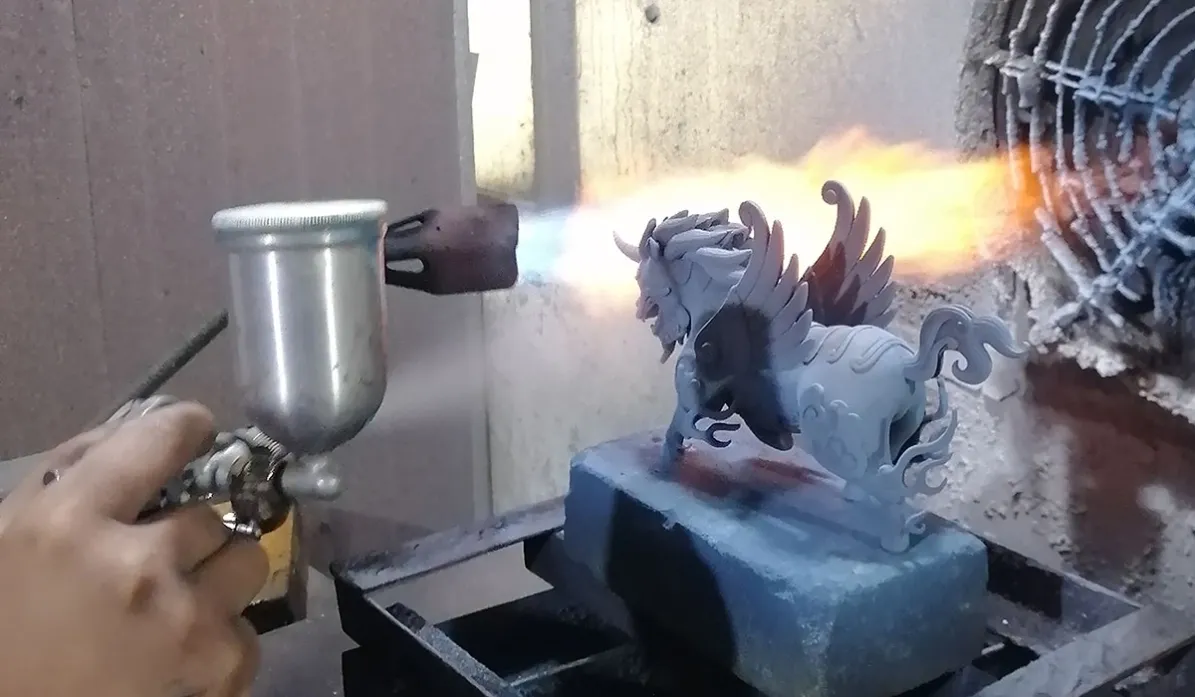
If you've looked at bronze sculptures and wondered why some look rich and deep while others look flat and painted-on, you've been looking at the difference between good patina and bad patina. The patina isn't decoration. It's the surface of the metal — the thing that determines how the sculpture looks in a room, in a photograph, under different lighting conditions, in five years, in twenty.
Choosing a patina is one of the most consequential decisions in a custom bronze commission. And it's the one that most buyers understand least. This guide fixes that.
What Patina Actually Is
Patina on bronze is not paint. Paint sits on the surface. Patina is a chemical conversion layer — the bronze itself reacts with chemicals applied during the finishing process, creating a surface that's part of the metal rather than on top of it.
This distinction matters for three reasons:
Durability. A patina that's chemically bonded to the metal is permanent under normal conditions. A paint finish is a coating that can chip, flake, or wear away over time. This is why museum-quality bronze sculptures are patinated, not painted.
Aging. A true patina ages gracefully — it deepens and evolves over years in a way that adds character. A paint finish ages by degrading. The difference between a twenty-year-old patina and a twenty-year-old paint job is the difference between wine and vinegar.
Depth. Patina has visual depth — micro-variation in color across the surface that creates richness and dimensionality. Paint has color, not depth. This is what separates a bronze that looks like a bronze from one that looks like something trying to look like a bronze.
The Main Patina Families
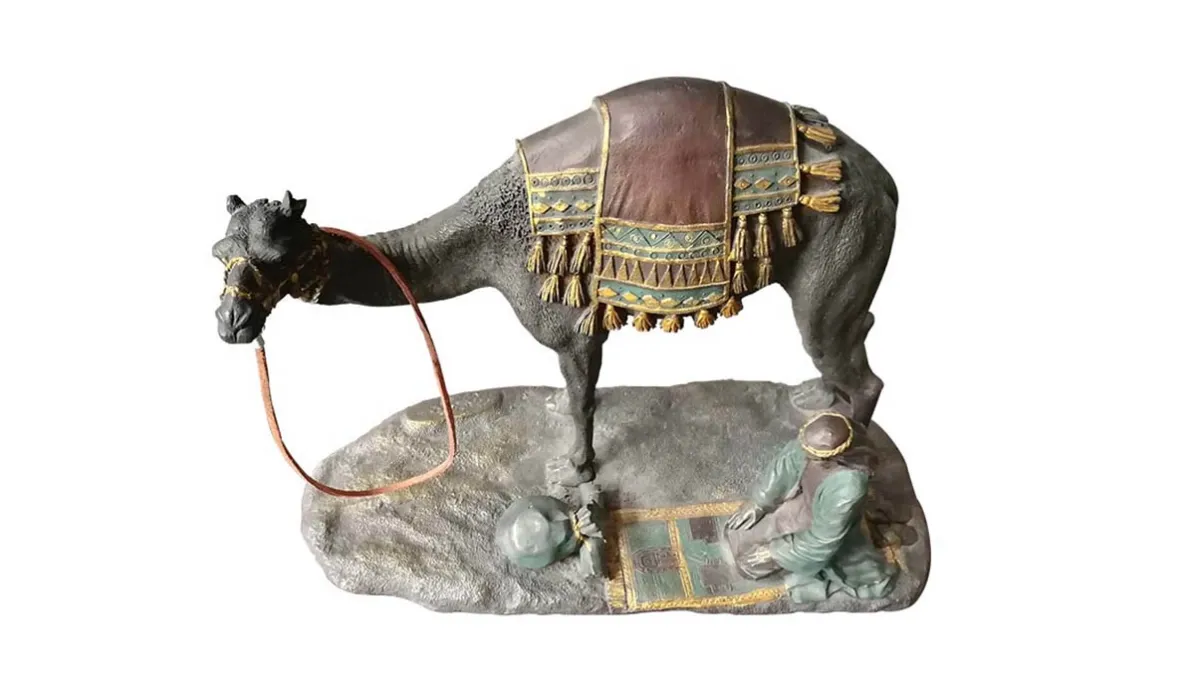
Natural / Verdigris Patina What it is: Green-blue coloration resulting from natural oxidation or accelerated natural oxidation. The same patina that gives the Statue of Liberty its color. Color range: Light aqua-green through deep teal-blue. The exact color depends on the alloy composition and the specific chemistry of the oxidation process. Best for: Outdoor sculptures, pieces meant to evoke antiquity, classical and Mediterranean contexts. Considerations: Verdigris patina is the most variable and least controllable of the patina families. It develops unevenly and can shift in color over time. For commissions where color consistency matters, specify carefully and request samples.
Brown / Antique Brown Patina What it is: The most common and versatile bronze patina. Achieved through ferric nitrate application to heated bronze, producing warm brown coloration with subtle variation. Color range: Light antique brown through deep dark brown. The depth is controlled by the number of application layers and the temperature at which they're applied. Best for: Almost everything. This is the workhorse patina — appropriate for classical figures, animals, abstract sculptures, and interior or exterior use. It photographs well under most lighting conditions. Considerations: Some brown patina recipes use chemicals that fade more quickly under UV exposure. For outdoor pieces, specify UV-stable brown patina chemistry from the outset.
Black / Dark Patina What it is: Dense black-brown coloration, achieved through ferric nitrate application or liver of sulfur (potassium sulfide) on heated bronze. Color range: True black through dark charcoal brown. The best black patinas have subtle color variation that prevents them from looking flat. Best for: Contemporary and minimalist interiors, dramatic sculptures, religious and ceremonial pieces. Particularly effective when paired with high-contrast bases or in spaces with strong lighting. Considerations: Black patina is the most unforgiving of application errors. A poorly applied black patina shows every surface defect. It requires the most skilled patina artist and the cleanest casting surface.
Warm Bronze / Amber Patina What it is: A warm, reddish-gold coloration achieved through controlled copper nitrate application. This patina emphasizes the natural color of the bronze alloy. Color range: Light golden bronze through warm amber to rich reddish-brown. This is the patina family with the most "warmth" — it reads as golden rather than brown. Best for: Traditional interiors, classical sculptures, pieces that need to complement warm materials (wood, leather, dark fabrics). Often used for figurative and religious sculptures. Considerations: Warm bronze patinas tend to be lighter-reflecting, which can make surface defects more visible than on darker patinas. Castings for warm patina pieces need to be especially clean.
Multi-Layer / Variable Patina What it is: A deliberate combination of two or more patina chemistries applied to different areas of the same piece — for example, dark patina in recesses with warm bronze on high surfaces. Color range: Unlimited — this is a technique, not a color family. The variation creates depth and visual interest that single-color patina cannot achieve. Best for: Sculptures with complex surface geometry, figurative work where anatomical detail benefits from tonal variation, pieces meant to be photographed under dramatic lighting. Considerations: Multi-layer patina requires more skill and more time than single-color application. Each additional color layer adds application time and complexity. Budget accordingly.
The chemistry behind these finishes is its own subject — see the material science behind hot patina.
Environment and Use Considerations
The right patina depends on where the sculpture will live:
Indoor display, controlled environment: Any patina family works. Choice is aesthetic — what color best complements the room, the lighting, the other materials in the space.
Indoor but variable conditions (heating/cooling cycles, some humidity): Brown, black, and warm bronze patinas are more stable than verdigris in these conditions. Specify sealed patina for pieces in challenging environments.
Outdoor, moderate climate: Brown and black patinas are most stable. Natural/verdigris develops naturally but unpredictably. Specify sealing for outdoor pieces in any climate.
Outdoor, harsh climate (coastal, desert, industrial): Sealing is mandatory. Some patina colors are more UV-stable than others — specify this explicitly with your foundry. Black patina in particular can fade to brown in intense sun unless UV-stable formulations are used.
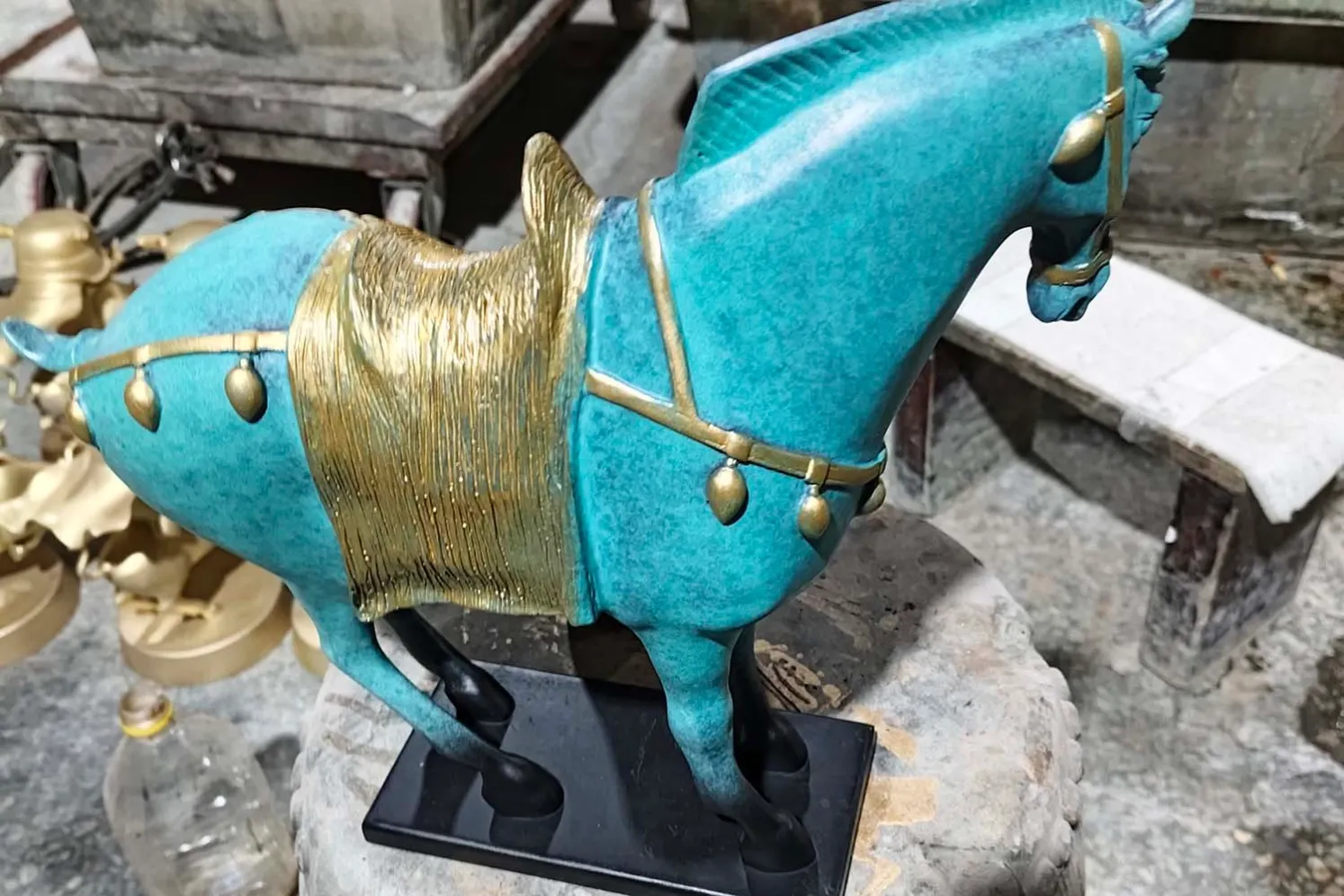
How to Specify Color for a Custom Commission
Send a reference. The most reliable method. If you have a piece with a patina you like, send us a photograph and a description of it. We'll match it.
Provide a Pantone reference. Pantone colors don't translate perfectly to patina (patina is metal chemistry, not pigment), but a Pantone reference gives us a target to develop toward. Specify whether you want the patina lighter or darker than the Pantone.
Send a photograph. Less precise than a physical sample, but useful. Include the photograph in natural daylight, not studio lighting, and note the approximate color of the surrounding environment.
Describe the effect. "Warm, antique feel" or "dramatic, dark presence" — descriptive briefs help us develop the right patina direction even without a specific reference.
Develop on the sample piece. For color-critical commissions, we adjust the patina on the sample across rounds — with detailed photographs at each stage — until the direction is right, before producing the final sample for your physical approval.
The Sample Approval Process for Patina
Patina approval is the most critical stage of sample approval. Here's how we handle it:
We develop the patina on the sample piece and send detailed photographs under multiple lighting conditions If the color needs adjustment, we revise and resubmit Once the direction is right, we produce the final sample for your physical approval On your written approval, we lock the chemistry formula and apply it to the full production run.
Do not authorize production without a patina sample you're satisfied with. Once production commits, changing the color requires re-casting.
Patina Maintenance
All patinated bronze benefits from simple care — dust with a soft dry cloth, and an occasional coat of good paste wax to protect the surface and deepen the color. Re-patina is rarely needed; local touch-ups usually cover damage. For the full care routine, see our hot patina care guide.
Ready to Discuss Your Patina?
If you're commissioning a custom bronze sculpture and want to explore patina options, send us your project brief and we'll develop sample patina options for your approval. Pricing is set out in your quotation.
Once the finish is settled, the piece is the next question: Bronze Horse Sculptures and Custom Bronze Sculpture.