Trophy horse
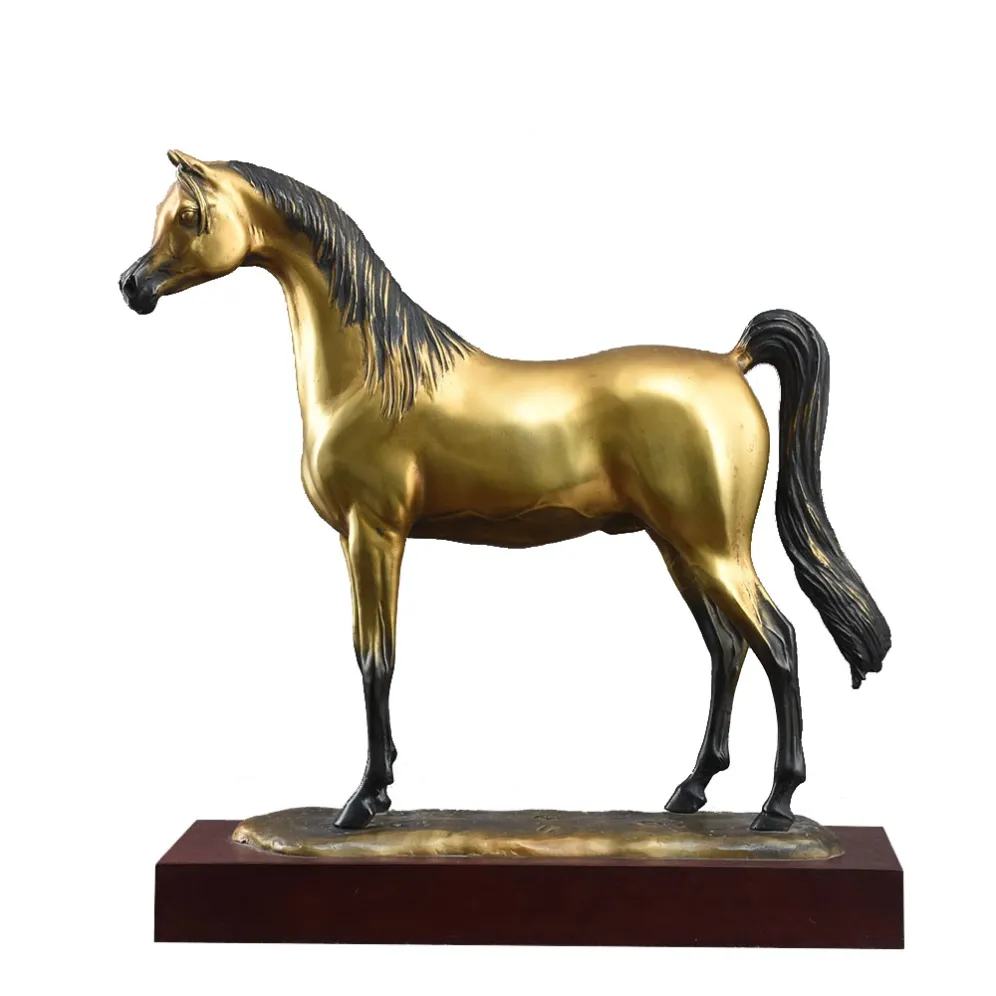
Square on all four feet, head up, mane and tail held in black. This is the shape associations hand to a champion.
Five designs, all cast in brass by the lost-wax method and finished by hand. A standing horse for awards, a rearing horse for shelves, two Tang-style horses for lobbies and retail, and a galloping pair on shipwreck wood for statement spots.
Not every horse suits every space. The standing one was built for awards. The rearing one reads at a glance on a shelf. The Tang horses are made at tabletop scale for lobby consoles and retail windows.
Square on all four feet, mane and tail held in black. The shape associations hand to a champion.
Same casting method, five different jobs.
Square on all four feet, head up, mane and tail held in black. This is the shape associations hand to a champion.
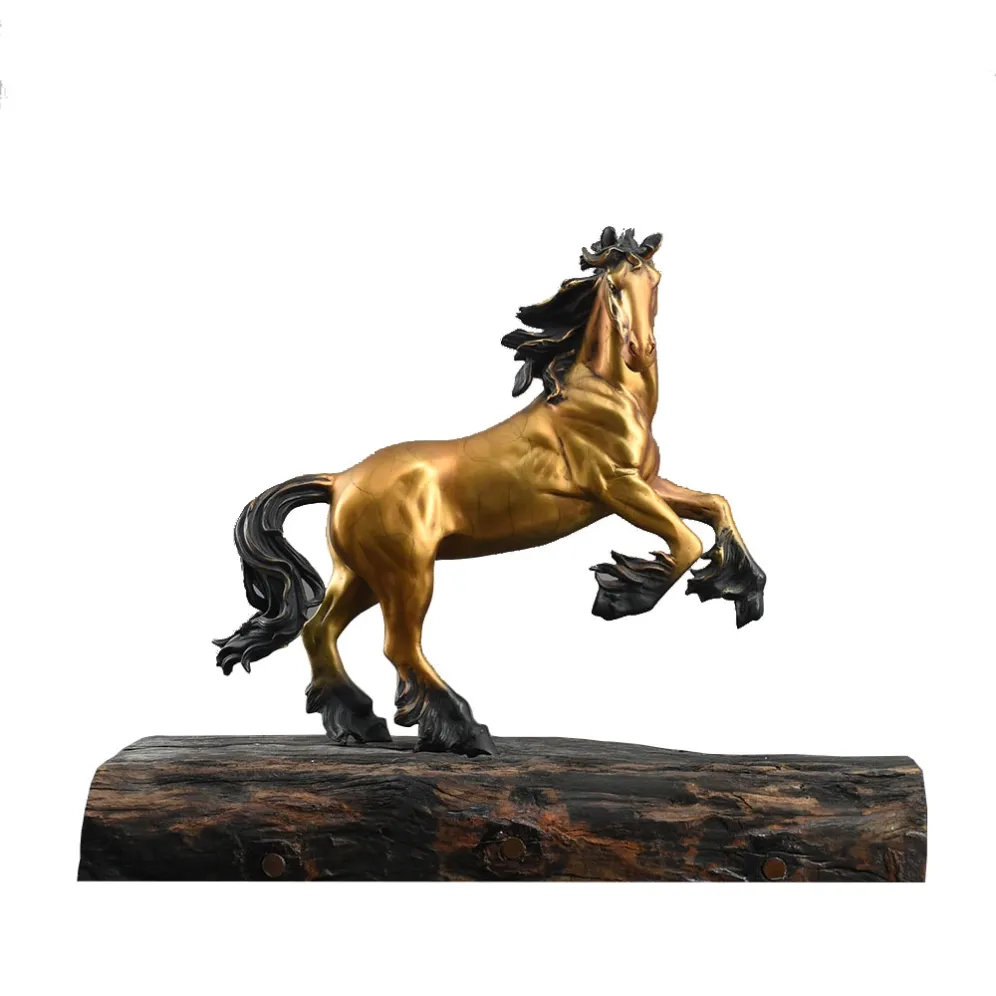
Up on the hind legs, front hooves off the ground. On a shelf it reads at a glance, and the black hair pulls the eye down to the hooves.
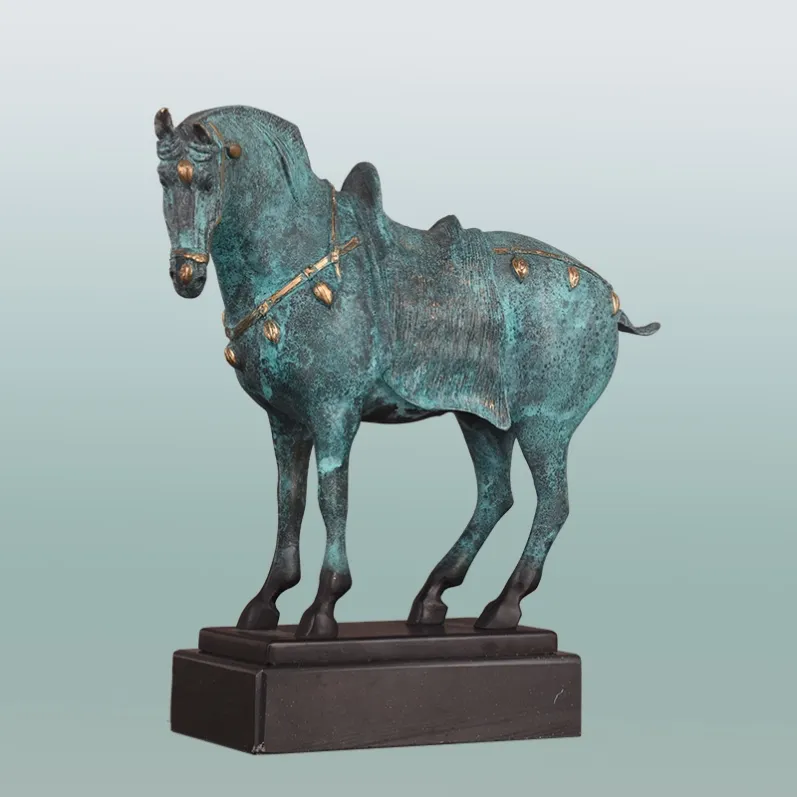
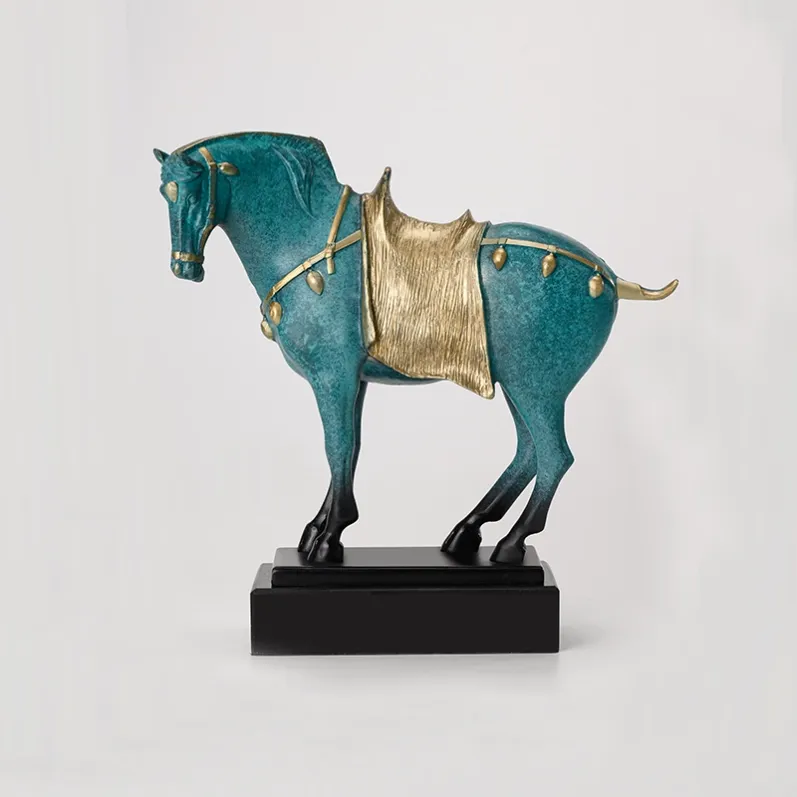
Head high, chest forward, legs planted — Tang court posture, not a copy of any one piece. The turquoise patina goes on by hand, layer by layer.
The same family built for procurement: turquoise patina, gilded saddle, and a scale that sits on a console or a retail plinth.
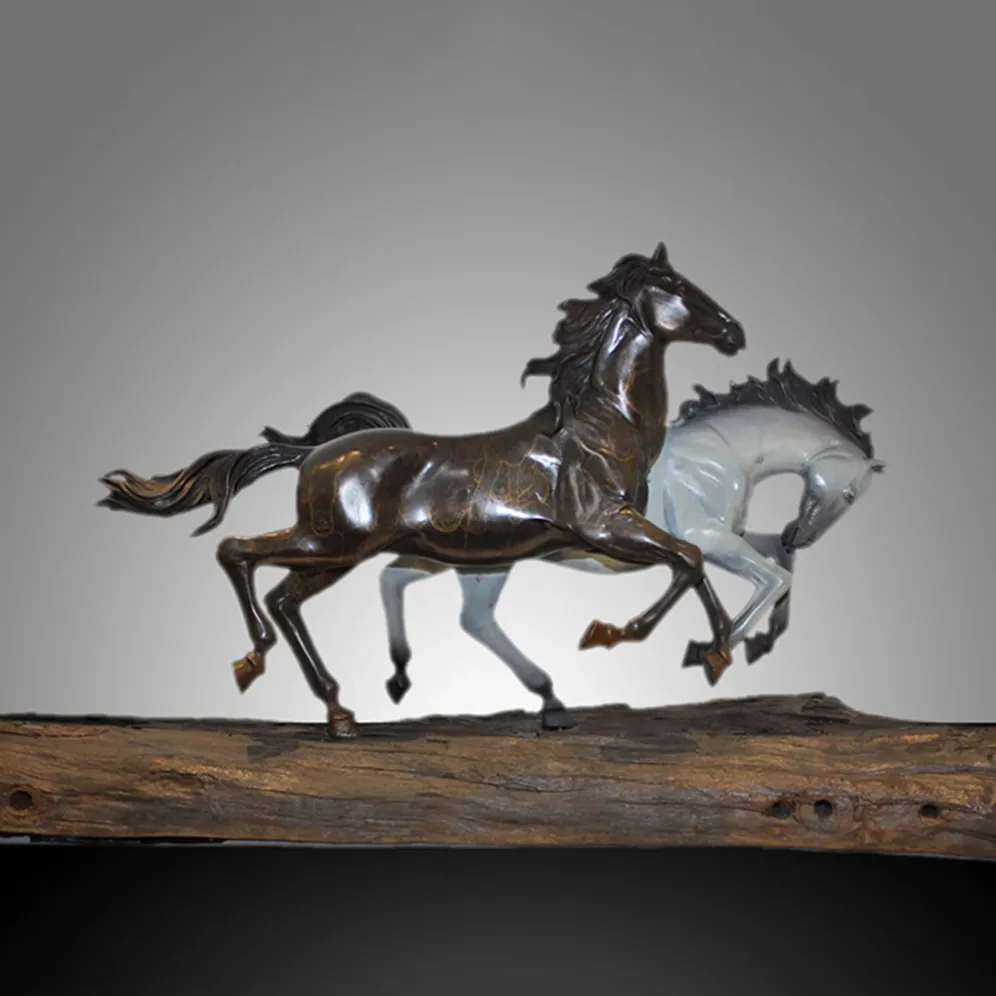
Galloping pair — two horses crossing mid-stride, one dark one silver, on reclaimed shipwreck wood. The only multi-figure design in the line.
Everything here starts as a wax model, one per casting.
Each piece gets its own wax model. It is slower than working from a re-used mould, and it keeps the detail a re-used mould flattens.
Chasing, patina and finishing are done by hand after the pour. The two-tone finish on the standing and rearing horses is patina, not paint, so the contrast does not chip off.
Every casting is sealed after the patina goes on, so the colour stops darkening and the surface survives handling. Small step, and most buyers only notice it when it is missing.
Two of the four are made to your dimensions.
The standing and rearing horses are scaled to the cabinet, plinth, shelf or mantel you have. Give us the measurement and we cast to it, rather than handing you a fixed size and calling it custom.
The Tang horses are made in that range, larger sizes possible. At that scale the casting is hollow — the wall is kept thin, and the piece still carries real weight for its size.
The standing horse sits on a cast ground with a rectangular wooden plinth. The others take a wooden base, and reclaimed shipwreck wood can be used when the piece is a one-off.
Most buyers start with a reference and a measurement.
A drawing, a photo of the piece you want, or a horse you already own and want cast again at a different size. All three work.
Quantity, the space it goes in, and the window you are working to. We will say plainly what fits and what does not.
Casting, patina, finishing, base and export packaging sit with us, so there is one place to ask when something needs to change.