Animal Sculptures
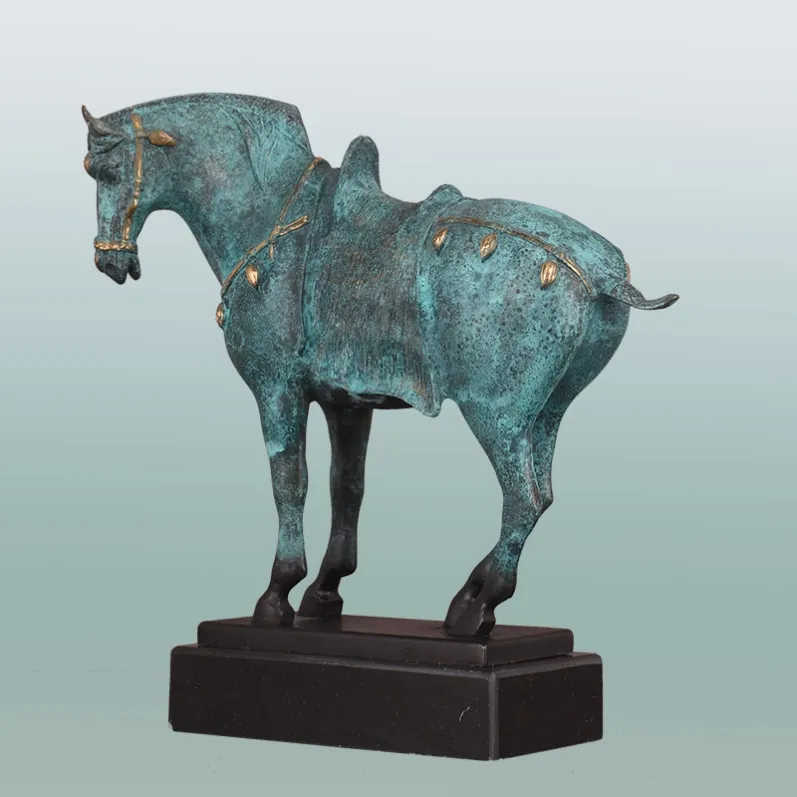
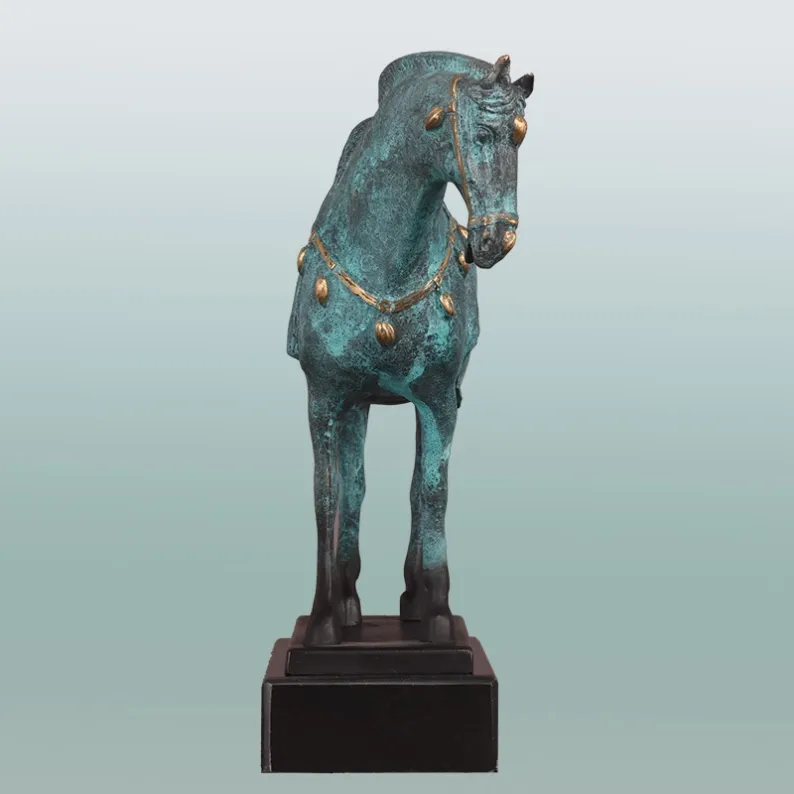
Hand Lost-Wax Cast Tang Horse Sculpture | Verdigris Bronze Art Statue
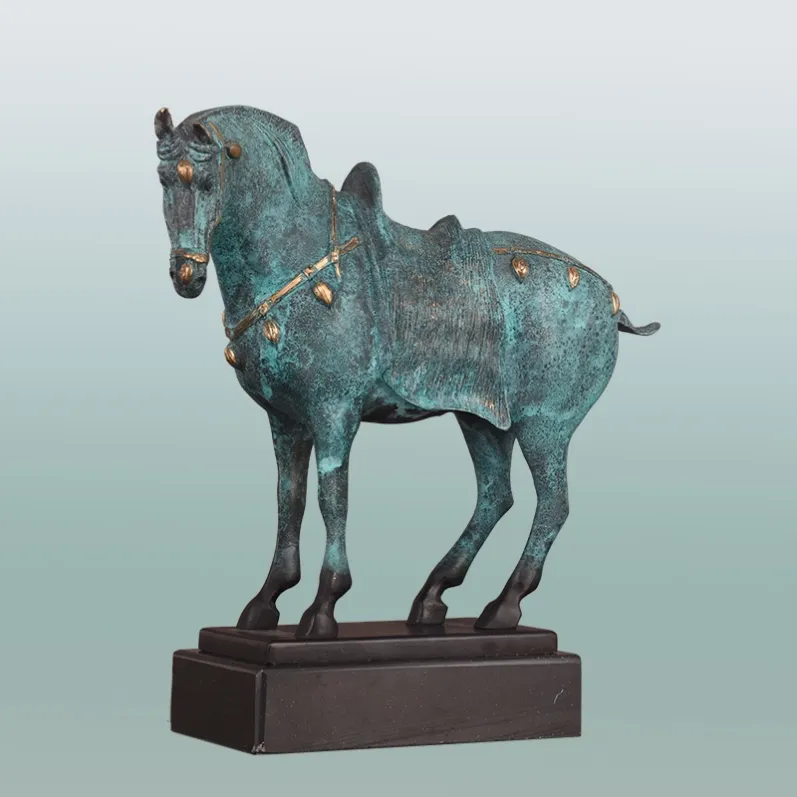
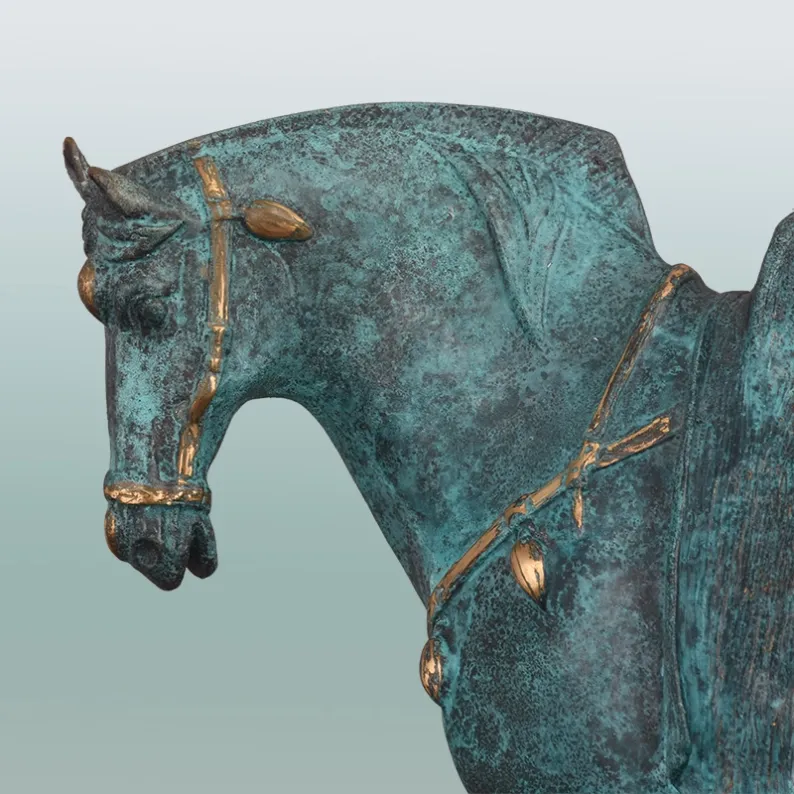
Each Tang-style horse is cast in brass by the lost-wax method — one wax per piece, no shortcuts. The turquoise patina goes on by hand, layer by layer. The gold trim on the harness? Brushed on individually. The result is a piece that feels ancient but fits a modern shelf. Corrosion-proof, scratch-resistant, and weighted with a black marble-finish composite stone base. Made to be handled, displayed, and kept.
Specifications
- Material
- Cast Brass
- Wall Thickness
- Approx. 3 mm
- Size
- Standard Sizes / Custom Size Available
- Craft
- Lost-wax casting, hand-chased detailing, hot patina
- OEM & ODM
- Available
- Application
- Office Lobby, Hotel, Villa, Business Opening Gift
It Looks Like It Belongs in a Museum. But It's Meant for Your Shelf.
This horse takes its shape from Tang dynasty court art—those sturdy, proud figures you see in ceramics and tomb murals. But we didn't copy one. The sculptor worked from the period's characteristic posture: head high, chest forward, legs planted. Then he simplified it. Cleaned up the lines. Made it feel less like a relic and more like something you'd actually want to live with.
How It's Made—and Why That Matters
Lost-wax casting is one of the oldest metalworking methods still in use. Here's how it works: a wax model gets coated in clay, heated so the wax melts out, then filled with molten bronze. When it cools, the clay shell breaks away. Every single pour destroys the mold. That means no two pieces share the same casting—each one is literally its own original.
From there, the finish is done entirely by hand:
- The turquoise patina is painted on in thin layers, left to react, re-applied, adjusted, until the color sits right. It's not a formula; it's a judgment call.
- The gold accents on the bridle and saddle are brushed on with a fine tip—not plated, not sprayed. You can feel the raised edge if you run your finger across.
- The body lines are chased and refined after casting, restoring the crispness of the original wax sculpt.
Small shifts in color and texture aren't defects. They're the whole point. No two horses look exactly alike, and that's exactly how it should be.
Bronze That Actually Lasts
This is hollow-cast, like every lost-wax piece, with walls around
3 mm. It isn't plated, and there's no resin inside - heavy enough
that you notice when you pick it up, and tough enough that it won't
dent or scratch from normal handling.
Bronze doesn't rust. It doesn't fade under indoor light. The patina you see is already oxidized, so it won't change much over time—just settle into a slightly deeper tone. No polishing. No maintenance. Just dust it occasionally with a dry cloth and forget about it.
The base has a matte black marble-finish surface. It adds weight and stability, so the horse stays put on a shelf even if someone bumps the table.
Where to Put It
It's quieter than most bronze sculptures, which is what makes it versatile:
- On a light oak console in a Scandi-living room—the dark patina stands out without clashing.
- On a walnut desk in a home office—it looks like something you'd see in a design magazine.
- In a library or study, next to leather-bound books—it doesn't compete with other objects; it just belongs.
- In a boardroom or reception area—unpretentious but unmistakably high-end.
Symbolically, the horse stands for forward movement and steady progress. But honestly, most people buy it because it's beautiful. If you're giving it to someone who appreciates real craftsmanship—not just logos and price tags—they'll understand what they're looking at.