Buying Guides
How to Vet a Bronze Sculpture Manufacturer Before You Order: a 10-Point Checklist
Ten checks that separate a real bronze sculpture foundry from a well-designed front — factory, alloy, sample, quotation, packing. Written for first-time project buyers.
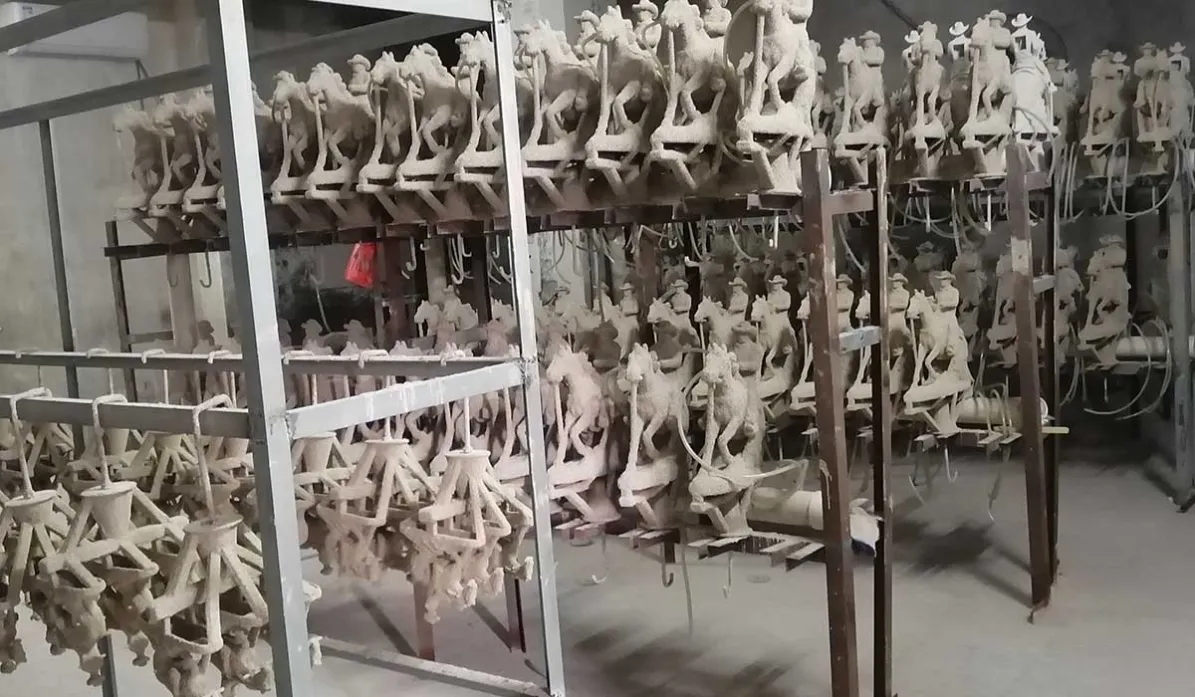
Most problems with custom bronze sculptures do not start in the casting shop. They start earlier, when a buyer accepts a smooth catalog and a confident reply without checking who is actually going to pour the metal. This page gives you ten checks to run before you commit to a manufacturer: what to ask, what a straight answer sounds like, and what should make you slow down.
It is written for importers, designers, and project buyers placing a first custom order, usually from another country. It is not a quotation and does not replace one — no prices, no schedules, and no terms live here. Those belong in a written quotation after your drawings have been reviewed. If you want the short version before the details: ask who pours the metal, ask which alloy, insist on a physical sample, and read the quotation line by line.
Why first orders go wrong
You are buying something that does not exist yet. You cannot touch the sample, you may be on another continent from the workshop, and every seller's website shows confident galleries. The gap you are trying to close is evidence — which claims can the supplier actually back?
When that gap stays open, the cost shows up later. A render survives every revision but never becomes a mold. An alloy photographs well and weathers badly. A sample round restarts because nobody confirmed the finish in writing. None of this is dramatic on day one. All of it gets expensive by month three.
The checklist below closes the gap in four areas: factory reality, material honesty, proof before production, and the commercial paper.
Checks 1–3: Who is actually casting
1. Ask which processes happen in their own workshop. Modeling, mold making, casting, finishing — a foundry that does the work can usually say, in one sentence, what happens under its own roof and what does not. A vague answer is not proof of a problem, but it is a reason to keep asking.
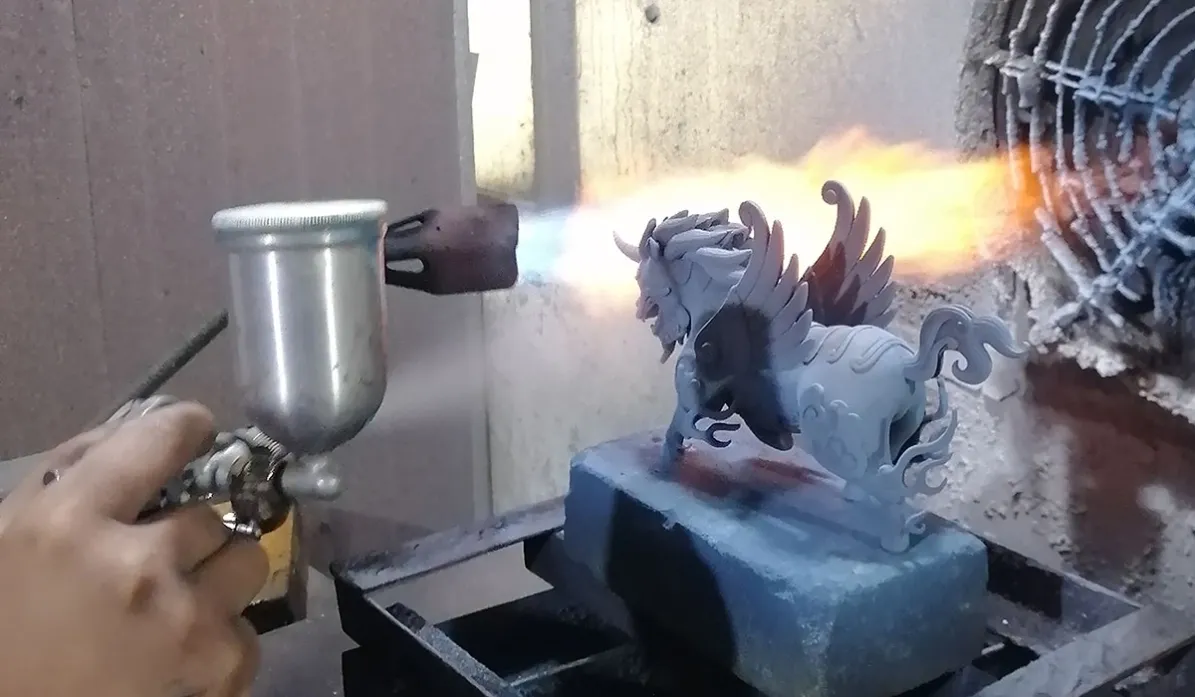
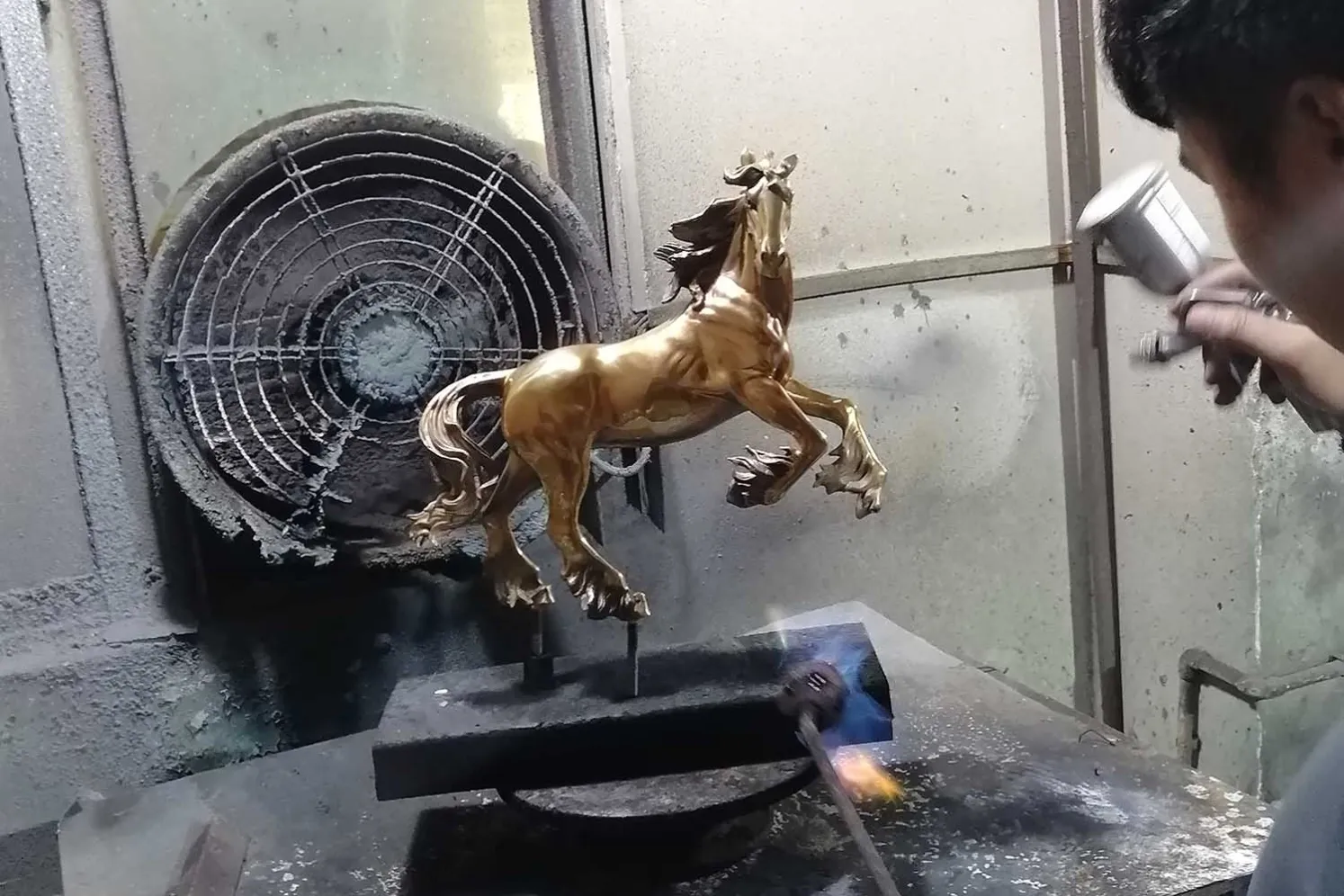
2. Ask for photos of their floor, not renders. Wax assembly, the shell room, finishing benches — real workshops photograph easily because they exist. This is also why we only show our own casting and finishing shots on this site: library images tell you nothing about the people who would handle your order.
3. Visit, or ask for a live video walk-through. If you are sourcing from China, our foundry is in Huizhou, Guangdong, within about an hour of Shenzhen, and buyers are welcome by appointment. Watching wax assembly and casting in person answers more questions than a week of email. If travel is not practical, a scheduled video call through the workshop works nearly as well.
Checks 4–6: What the metal actually is
4. Ask which alloy is quoted. Brass and bronze are different alloy families with different costs and different behavior outdoors. A careful supplier names the alloy in writing — for example Cast Brass for most indoor decorative work — instead of leaving you to guess from a photo.
5. Ask about construction and wall thickness. Works smaller than about 10 cm are typically cast solid; larger pieces may be cast hollow, built around controlled wall thickness — and the thicker the section, the more metal and the more weight. You do not need to become a metallurgist; you need a supplier who can explain the construction of your piece in plain words.
6. Ask what "bronze" means in your quotation. Alloy names get used loosely in this trade. The check costs one email and prevents an argument at the sample stage.
Checks 7–8: Proof before production
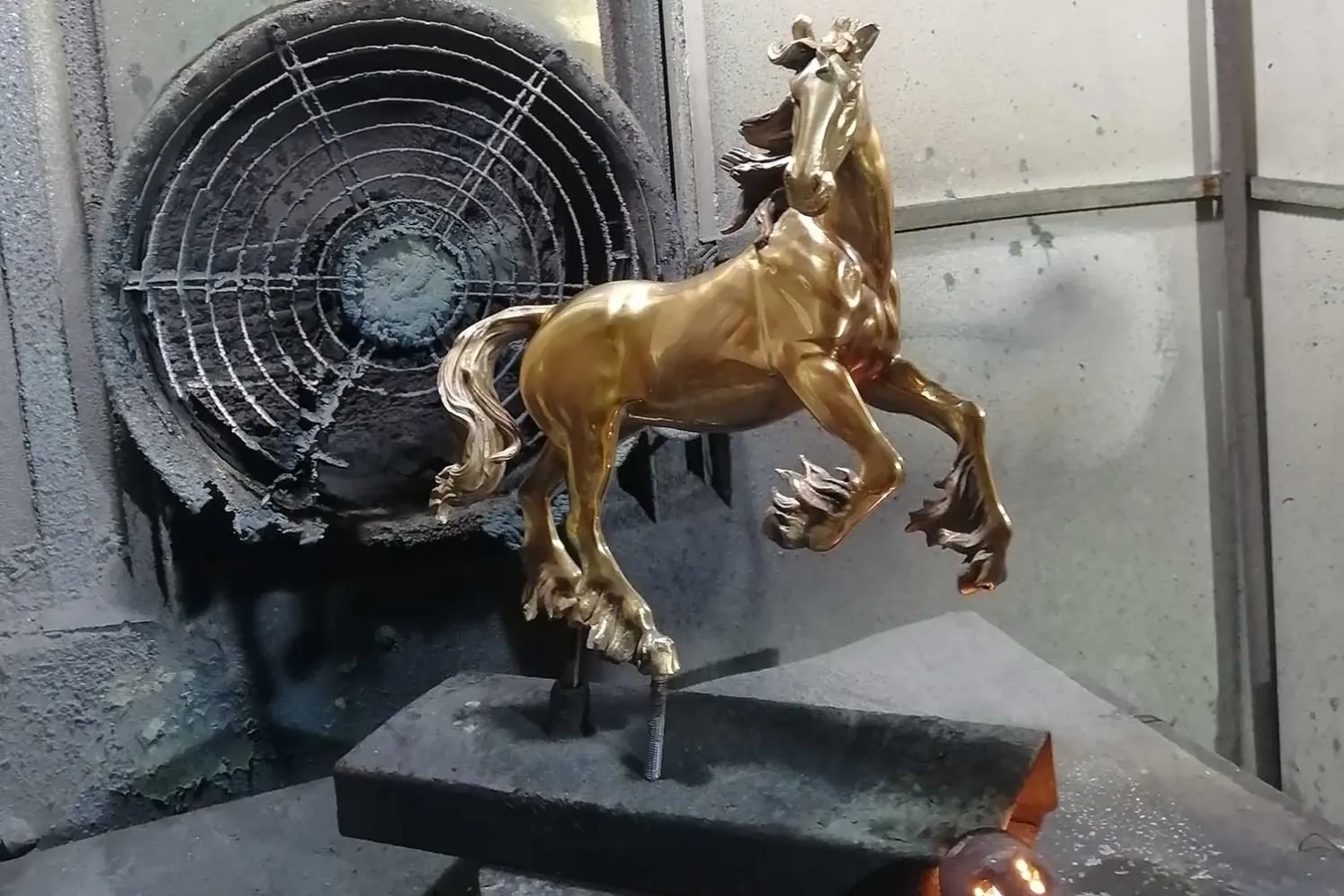
7. Insist on a physical sample in the final material and finish — not a render. Renders are for approving a shape. Only a sample in the real alloy shows you the surface, the color, and the weight. Whatever you agree about the finish, get it confirmed in writing before mass production starts, and expect sample costs to be set out in the quotation.
8. Check what they can work from. If you have a 3D file, ask whether they can take STL or OBJ directly — a production-ready file skips modeling and mold making entirely. If all you have is a photo or a sketch, ask who turns it into a 3D model, and when you get to approve that model before anything is printed or molded.
Checks 9–10: The commercial paper
9. Read the quotation line by line. A usable quotation names the alloy, the size, the finish, the base, and the packing, and states the delivery term and what taxes it excludes. Ask about anything missing. The moment to discover ambiguity is before you transfer money, not when the crates arrive.
10. Ask for a dated stage plan. Model, sample, casting, finishing — a foundry that runs a schedule can put stages in writing and keep you posted at each one. Weather and foundry schedules are real variables, so treat fixed promises with suspicion; treat silence as a bigger one.
Red flags worth slowing down for
None of these alone proves anything. Two or more together deserve a harder look:
- A gallery made entirely of renders or stock images, with no workshop photos.
- A price offered before anyone asked for your size, alloy, or quantity.
- An alloy that never gets named in writing.
- A sample that is only available as a picture.
- Answers that keep sliding away from "who pours the metal?"
How we answer these checks
You are allowed to run this list on us. We cast in our own foundry — Cast Brass and stainless steel, welded or cast — and the workshop photos on this site are ours. Every project includes a physical sample confirmed in writing before production. Quotations are itemized, and a dated schedule comes with them. If a part of your project genuinely belongs with a specialist outside our workshop, we will tell you that too, because the alternative is finding out from the sample.
If that is the kind of answer you are looking for, see what our casting line produces on the bronze sculpture manufacturer page, walk through the lost-wax casting process step by step, or compare OEM and ODM production routes if you are building a program rather than a single piece.
One next step
Send your reference drawings, photos, or 3D file through our custom sculpture page. We will confirm what we cast in-house, flag anything that needs a specialist, and come back with an itemized quotation worth reading line by line.