Buying Guides
Bronze Camel Sculptures: Meaning, Craft and How to Commission One
What the camel has meant in Middle Eastern art, and how a bronze camel sculpture is cast, finished and commissioned — a guide for project buyers.
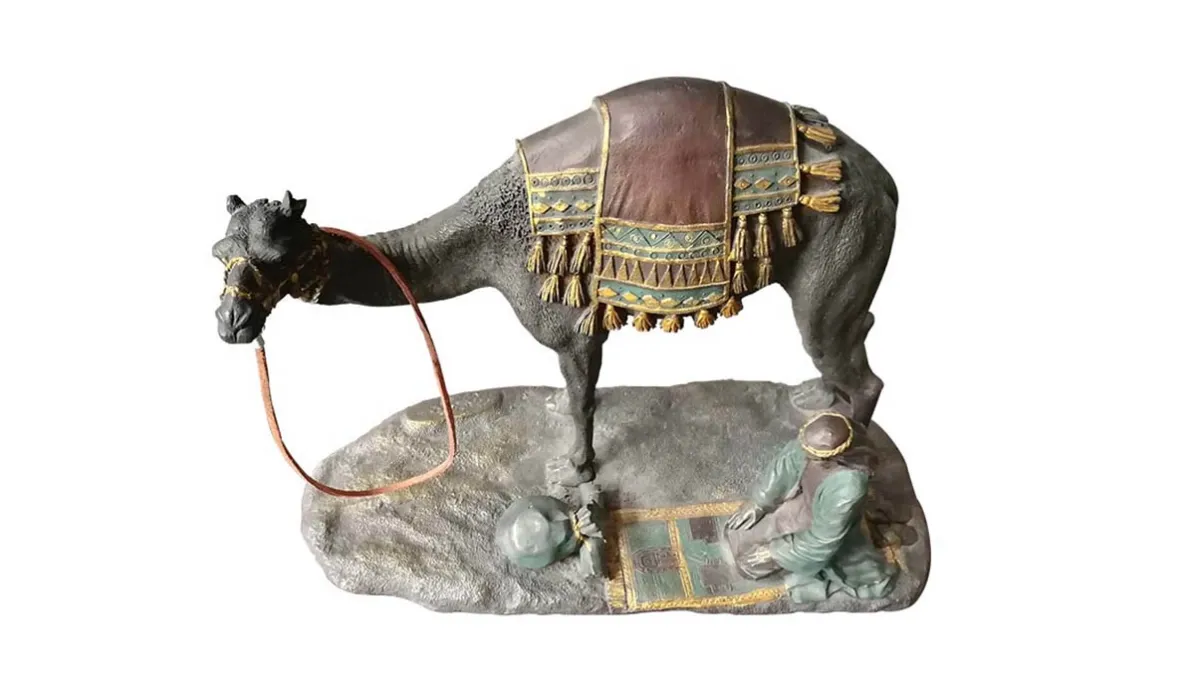
The camel in art isn't a camel. It's a symbol. Across the Islamic world and beyond, the camel carries associations that go far deeper than the animal itself — endurance, journey, desert, pilgrimage, trade routes, Bedouin heritage. When a buyer commissions a bronze camel sculpture, they're not just buying a sculpture. They're making a statement about identity, culture, and meaning.
That makes it a more demanding commission than it looks. A camel sculpture that looks technically correct but culturally tone-deaf misses the point entirely. And a camel sculpture that feels authentic — that carries the weight of its cultural context — is something genuinely special.
This article covers the cultural significance of the camel in art and what it means for commissioning bronze sculpture in this category.
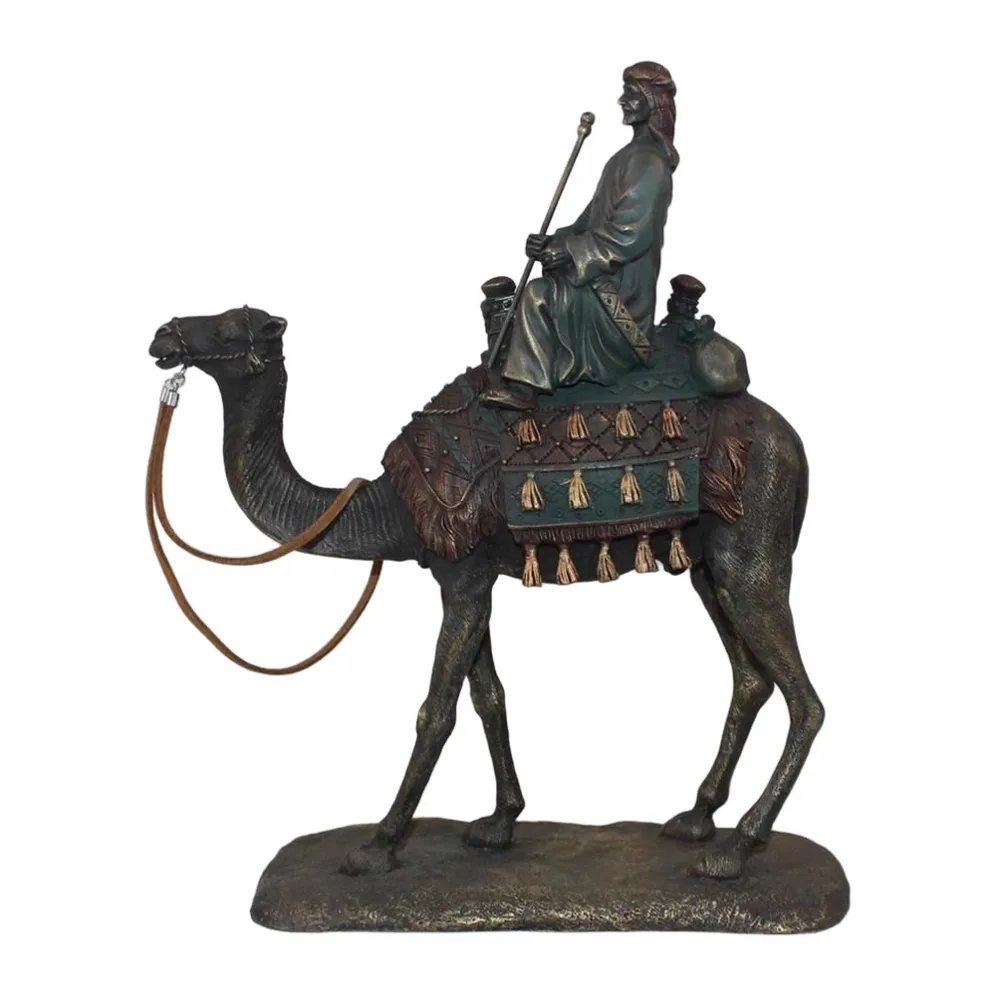
The Camel in Islamic and Arabian Art
The camel appears throughout Islamic art traditions — not as decorative motif but as a carrier of meaning. Key associations:
Journey and pilgrimage. The Hajj pilgrimage to Mecca was undertaken by camel historically, and the association remains strong. A camel sculpture in a cultural institution, a majlis, or a private collection with Islamic heritage carries the weight of this association.
Desert and Bedouin heritage. In Gulf countries particularly, the camel represents a pre-oil heritage — the desert way of life, the nomad, the animal that made survival in extreme conditions possible. This association is particularly strong in Saudi Arabia, the UAE, Qatar, and Oman.
Prosperity and gift-giving. Camels historically represented wealth — they were the unit of account in pre-coinage economies. Giving a camel in bronze has an association with giving prosperity. This is why camel sculptures appear as corporate gifts in Gulf business culture.
Resilience and patience. The camel's endurance — its ability to go days without water, to carry burdens across desert, to survive conditions that kill other animals — makes it a symbol of patience and resilience. In a corporate context, this maps to organizational values.
The Prophet's camel. In Islamic tradition, the camel has a place in early Islamic history. For buyers with this cultural context, a camel sculpture is never just decorative.
Camel Sculpture Traditions Across Cultures
Arabian/Gulf Camel Sculpture
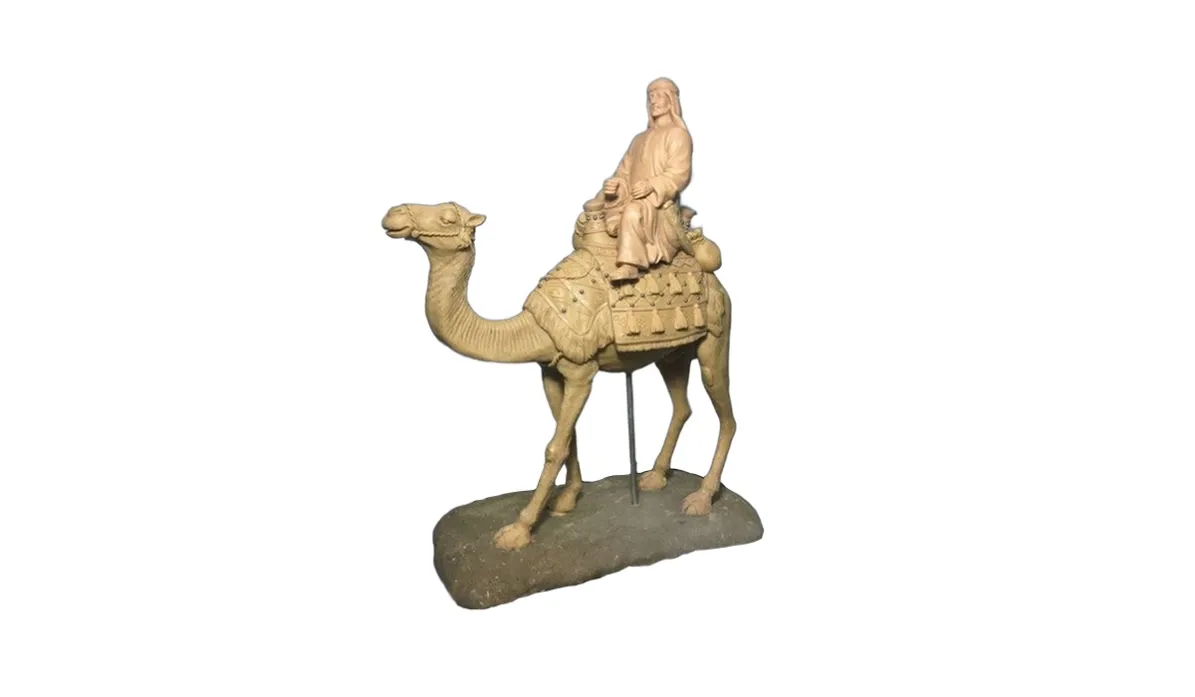
The Gulf camel tradition tends toward naturalism — anatomically accurate camels in poses that reflect real camel behavior. The racing camel mid-stride, the resting camel with tucked legs, the laden caravan animal.
This tradition favors:
Accurate anatomy — proportions that reflect real dromedary camels, not idealized or cartoonish versions
Surface detail — coat texture, musculature, facial structure — that rewards close viewing
Patina choices that complement the warm, sandy environments typical of Gulf architecture
Scale that commands presence — camel sculptures in Gulf contexts tend toward large and imposing
North African Camel Sculpture
The Maghreb tradition (Morocco, Algeria, Tunisia, Egypt) often shows the camel in caravan context or in the specific visual vocabulary of Saharan culture. More stylized than the Gulf tradition, with greater abstraction of form.
Berber and Tuareg camel art traditions emphasize the silhouette over the detail — camels as part of broader geometric decorative vocabularies.
Western/Egyptian Revival Camel Sculpture
Egyptian Revival and Orientalist art traditions produced camel sculptures in the 19th and early 20th centuries — largely for European audiences. These pieces tend toward the romanticized and slightly stylized. They exist as a distinct reference tradition that some buyers draw on.
Commissioning a Culturally Resonant Bronze Camel
When commissioning a camel sculpture, the most important decision isn't size or patina — it's whether the design captures something real.
Research the specific camel you're representing. There are two main camel species — the dromedary (one hump, native to North Africa and the Middle East) and the Bactrian (two humps, native to Central Asia). These are not interchangeable. Gulf and Middle East buyers expect dromedary camels. Getting this wrong is the equivalent of confusing a horse with a donkey.
Consider the regional specificity you want. If you're sourcing for a Saudi context, the cultural references will be different from a UAE context or an Egyptian context. If you know your buyer or recipient's regional identity, reference it.
Think about the pose. A racing camel mid-stride has different resonance than a camel at rest, which has different resonance than a laden camel at a caravan halt. Each pose carries a different symbolic weight.
Patina matters. Camel sculptures in warm, sandy patinas — amber, light brown, natural bronze — feel more appropriate in desert and Gulf contexts than dark or cool-toned patinas. That said, modern and minimalist Gulf interiors sometimes prefer dark patina camel sculptures for contrast. Discuss the intended environment with your foundry.
Scale sends a message. A life-size camel sculpture in a hotel lobby is a statement about presence and power. A 20cm tabletop piece is intimate and collectible. Match the scale to the context.
Common Mistakes in Camel Sculpture Sourcing
Getting the species wrong. Dromedary vs. Bactrian is the most common factual error. If you're working with a supplier who doesn't know the difference, find another supplier.
Defaulting to generic forms. Camel sculptures that are scaled-up versions of tourist trinkets — stylized, inaccurate, generic — don't carry cultural weight. Commission from a foundry that understands anatomy and has worked in this category.
Ignoring regional preferences. Buyers in the UAE have different aesthetic preferences from buyers in Saudi Arabia or Egypt. If your target market is the GCC specifically, make sure your supplier understands those preferences.
Under-specifying for outdoor exposure. Camel sculptures in Gulf outdoor environments — hotel exteriors, public spaces, retail developments — need sealing specified for outdoor exposure from the outset. This isn't optional in high-humidity environments with significant temperature differentials.
Treating camel sculptures as commodity items. The camel in this cultural context carries meaning. A supplier who quotes the same generic camel form for three different clients without asking about context is selling you a trinket, not a meaningful piece.
Our Work in This Category
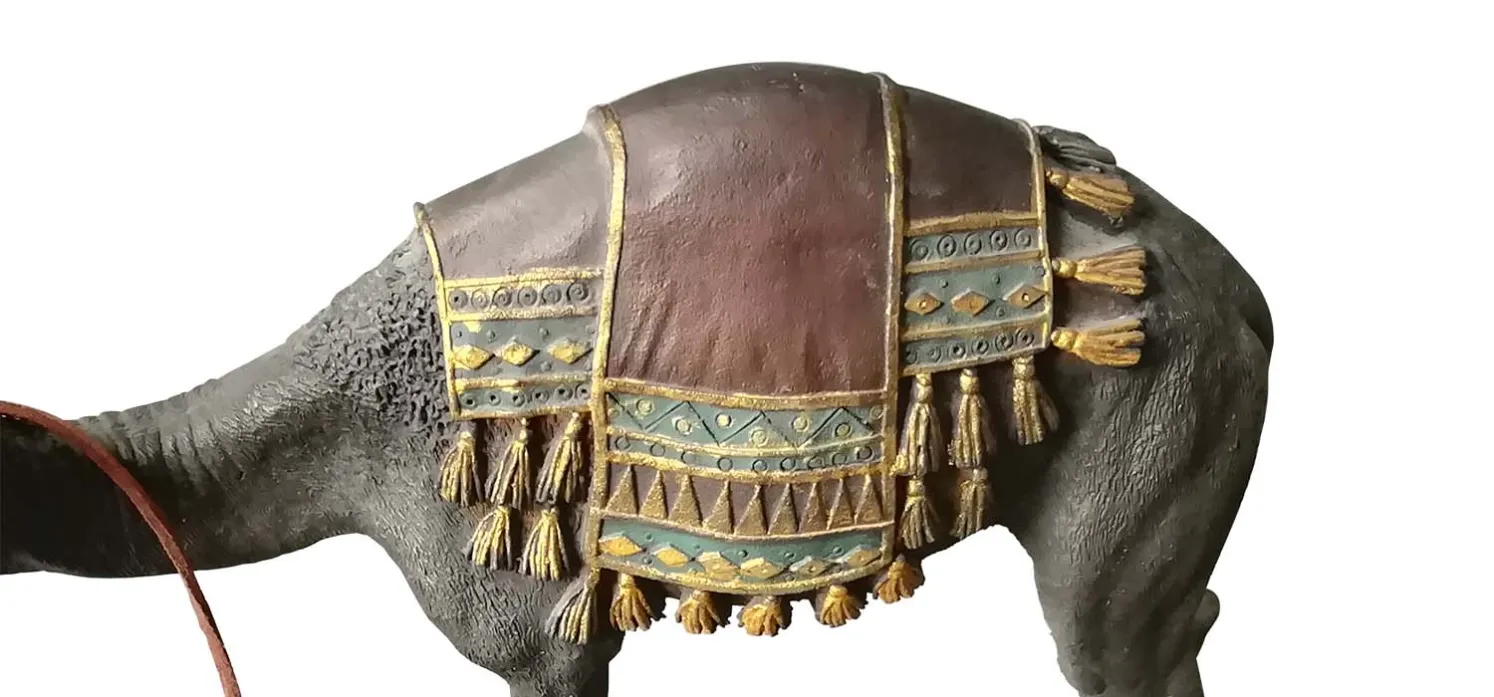
We build our camel sculptures for the Gulf and wider Middle East market — dromedary anatomy, poses drawn from real camel behavior, and patinas chosen for desert environments. When you commission a camel sculpture with us, we ask about context. Not to slow things down — but because a camel sculpture that means something requires more than a generic form.
Ready to Discuss Your Project?
Tell us about the intended context — project type, location, scale, and any references or concepts you've already developed. We respond within one business day with initial feasibility feedback; detailed pricing is set out in your quotation once scale and quantity are defined.
Planning an actual procurement for a Gulf project? Read our sourcing guide to custom bronze camel statues for Middle Eastern projects.