Buying Guides
Bronze Sculpture Sizing Guide: Choosing the Right Scale
Scale is the decision most bronze buyers get wrong. How to choose the right sculpture size for tabletops, floors, lobbies, and outdoor spaces — and why proportion wins.
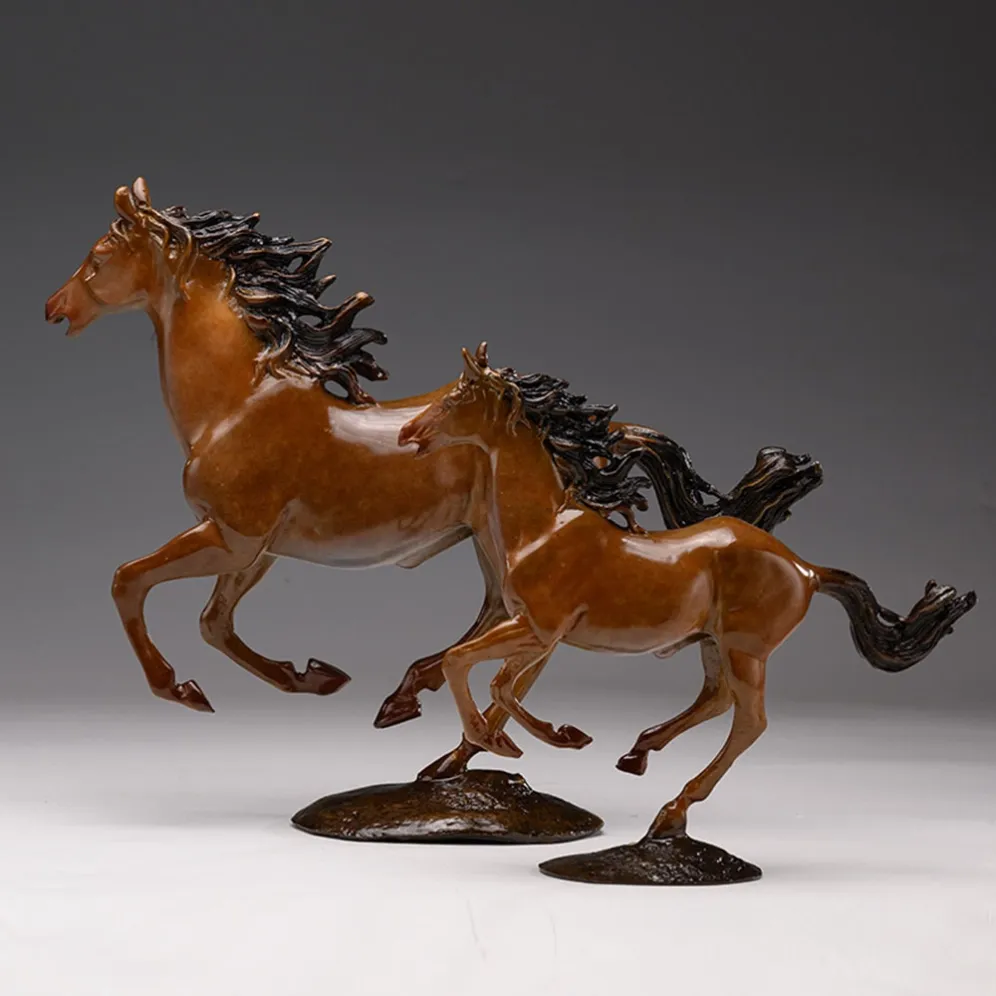
Scale is where most sculpture buying decisions go wrong. Not because buyers are inexperienced — because scale is genuinely hard to judge from photographs, and most buyers haven't developed the trained eye that designers and architects spend years building.
A piece that looks stunning in a product photo can look lost in a large lobby. A piece that photographs well in a small room can overwhelm a dining table. And a piece that looks correctly proportioned on a website can look awkwardly undersized when it arrives and sits next to your furniture.
This guide is about developing an intuitive sense for scale — and the specific rules that apply in different contexts.
The Three Scale Mistakes
Mistake 1: Buying from the Photo Instead of the Room This is the most common error. Bronze sculptures photograph extremely well. A skilled photographer controls the lighting, the background, and the framing to make the piece look perfect. That's not deception — it's photography. But it means that a 40cm sculpture photographed in a white studio against a clean background looks proportionally identical to a 2-meter sculpture photographed the same way. The photo gives you no scale reference. The fix: Always get the actual dimensions and evaluate them against your space. Measure your surface or floor area. Don't rely on the photo.
Mistake 2: Treating Size and Impact as the Same Thing A common assumption: a larger sculpture has more impact than a smaller one. This is usually wrong. Impact comes from proportion — the relationship between the sculpture and its surroundings. A correctly proportioned 30cm piece on a console table creates more impact than a disproportionately large 80cm piece that overwhelms the table and looks awkward in the room. The fix: Think in terms of proportion first, scale second. A piece that's the right proportion for its space always outperforms a piece that's the wrong proportion at any size.
Mistake 3: Ignoring the Base Height Buyers often evaluate the bronze figure size without accounting for the base. A 40cm figure on a 20cm base is a 60cm total visual height. If you're planning for a 60cm space, the figure needs to be scaled to 20–25cm to accommodate the base. The fix: Specify base height as part of your sizing conversation from the start. Ask for total visual height, not just figure height.
Scale Reference by Application
Tabletop Sculptures (10–30cm total height) Best for: Desks, console tables, bookshelves, credenzas, bedside tables. Scale principles: The piece should not extend beyond the edge of the surface when viewed from above A tabletop piece should take up roughly one-third to one-half of the available surface width In a room context, tabletop pieces are the smallest category — they work in groups or as part of a composition Common error: Buyers often choose tabletop pieces that are too small. A 15cm sculpture on a large desk looks like an afterthought. If you're buying for a large surface, consider a floor piece instead.
Small Floor Sculptures (30–60cm total height) Best for: Corners, beside sofas, entryway niches, secondary floor positions in larger rooms. Scale principles: In a room context, a floor sculpture should be large enough to read from a distance — not a tabletop piece on the floor The piece should relate visually to the nearest furniture element (a sofa, a console) without touching it A 40–50cm piece works best beside furniture of similar visual weight — a large sofa, a tall bookshelf Common error: Choosing a piece that's too small to read as a floor sculpture. If you need to step back to see it clearly, it's too small for its floor position.
Medium Floor Sculptures (60cm–1.2m total height) Best for: Feature positions in living rooms, beside dining tables, hotel lobbies (secondary positions), office reception areas. Scale principles: This is the most versatile scale — it works in both residential and commercial contexts A medium floor sculpture should be large enough to anchor a space without dominating it In a lobby context, this scale works as a secondary feature piece — not the hero sculpture, but significant enough to command attention Common error: Trying to use a medium floor sculpture where a large sculpture is needed. A piece that's correctly proportioned for a 20-square-meter living room looks lost in a 60-square-meter lobby.
Large Floor Sculptures (1.2m–2.5m total height) Best for: Large lobbies, grand entrances, open-plan commercial spaces, public areas, exterior entrances. Scale principles: At this scale, the sculpture becomes the architecture's partner — it defines the space rather than decorating it The piece should be visible and readable from the main approach direction Consider sightlines — a large sculpture positioned at a corridor end or at the end of an approach axis creates a deliberate visual destination Common error: Placing a large sculpture in a space that's too small for it — the piece dominates the room in a way that's oppressive rather than impressive.
Architectural Sculptures (2.5m+) Best for: Major lobby installations, exterior entrances, public plazas, landscape features. Scale principles: At this scale, the sculpture is experienced physically — people walk around it, past it, under it The detail level needs to be calibrated to the viewing distance — very fine detail disappears at 10 meters and above Structural engineering becomes part of the specification — internal armature, foundation requirements, wind load for outdoor pieces Common error: Overspecifying detail for outdoor or large-scale pieces. The detail that looks beautiful at 50cm looks busy at 3 meters.
The Scale Triangle: Three Reference Points
When evaluating scale for a space, use three reference points:
- Human scale. Where does the piece sit relative to a person's height and eye level? A piece that's above eye level is experienced differently from one at eye level. Consider how people will encounter the piece — walking toward it, standing beside it, looking down at it from above.
- Furniture scale. What furniture is the piece near? A sculpture beside a sofa should be proportioned to the sofa — roughly 40–50% of the sofa's height for a complementary piece, 70–80% for a piece that's meant to anchor the space.
- Room scale. How does the piece relate to the overall room? A useful rule: a floor sculpture should occupy roughly 5–8% of the floor area in a residential room. Less than 3% reads as insignificant; more than 15% begins to overwhelm.
Sizing for Specific Environments
Hotels and Hospitality Hotel lobbies present specific scale challenges: high ceilings, large floor areas, and the need for pieces that work in physical space, not just in photos. For a full walkthrough of lobby commissions — hero pieces, secondary positions, and how to phase them — see our hotel lobby commission guide.
Corporate Offices Office environments tend toward medium and small scales. Executive offices can accommodate medium floor pieces; open-plan areas and reception desks typically work better with tabletop and small floor pieces. Consider the furniture context carefully. A large executive desk with a 50cm piece on it reads very differently from a reception desk with the same piece.
Outdoor and Landscape Outdoor scale tends to run larger than indoor scale for equivalent impact — increase scale by roughly 20–30% when translating an indoor concept outdoors. For the full landscape project picture — placement, planting context, and specification — see our outdoor landscape sculpture guide.
Talking to Your Foundry About Scale
When commissioning, include these scale specifications in your brief: Total visual height (figure + base) Maximum width and depth Available floor area or surface dimensions Ceiling height (for indoor installations) Main viewing distance (how far will people typically be from the piece?) Photography context (will the piece be photographed frequently? for what context?) We'll scale the design to fit your specifications and flag any proportional issues before production commits.
When in Doubt, Go Bigger
If you're torn between two sizes, the larger one is almost always right. Small sculptures that look lost in their space are a more common problem than sculptures that are too large. This is especially true for: First commissions (you can always move a large piece; a small piece that doesn't work is just a mistake) Commercial and hospitality projects (spaces read at scale; undersized pieces communicate lack of investment) Outdoor and landscape projects (the outdoor environment swallows small pieces visually)
Ready to Discuss Scale for Your Project?
Send us your space dimensions and context, and we'll advise on appropriate scale and recommend design directions that will work for your environment. Detailed pricing is set out in your quotation once scale and quantity are defined.
Size is the one thing we need first, because it decides the casting route: Custom Bronze Sculpture and Contact Us.