Aug 26, 2026OEM, ODM & Bespoke
Custom Outdoor Bronze Sculptures for Landscape Projects
Planning a custom outdoor bronze sculpture? Learn how material, patina, scale, anchoring, installation, and maintenance affect landscape projects.
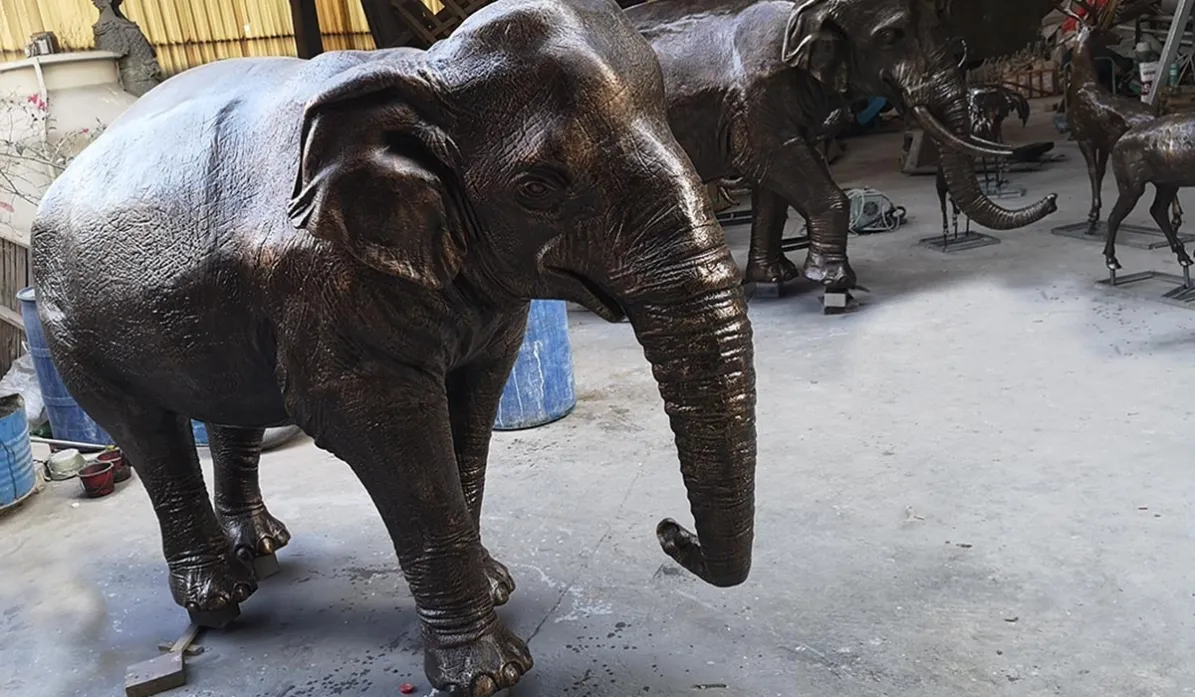
Outdoor bronze sculpture has to do more than look good. A sculpture installed in a garden, hotel entrance, resort, public plaza, or commercial landscape must work with its surroundings while standing up to sun, rain, humidity, temperature changes, and, in some locations, salt air.
That is why a custom outdoor bronze sculpture should be planned differently from an indoor sculpture.
Material selection, sculpture structure, patina, scale, anchoring, drainage, installation, and maintenance all need to be considered before production begins.
At Patinara Art, we work with landscape architects, designers, developers, hospitality groups, galleries, and commercial buyers on custom bronze sculpture projects. Our workshop provides sculpture development, lost-wax casting, hand finishing, patination, quality inspection, and export preparation for international projects.
Why Bronze Works Well for Outdoor Sculpture
Bronze has been used for outdoor sculpture for centuries because copper-based alloys can develop a protective surface patina when exposed to the environment.
The appearance of bronze changes naturally over time. Rain, humidity, sunlight, air pollution, salts, and local climate can all influence the surface.
For a landscape project, this aging process can become part of the character of the sculpture.
However, outdoor durability is not determined by the word "bronze" alone.
The alloy, casting quality, sculpture structure, surface finish, protective treatment, foundation, drainage, installation, and maintenance plan all affect long-term performance.
This becomes especially important for large outdoor bronze sculptures and projects located near the ocean, swimming pools, or other high-exposure environments.
What Makes an Outdoor Bronze Sculpture Different?
The basic casting process may be similar to an indoor sculpture, but the requirements of an outdoor project are different.
Before production, we normally consider six key areas.
1. Bronze Alloy and Installation Environment
There is no single bronze specification that is suitable for every outdoor location.
A sculpture installed in a dry inland garden has different requirements from one placed beside a beachfront resort, marina, swimming pool, or coastal public space.
Environmental exposure should therefore be discussed at the beginning of the project.
For example:
- Inland landscape projects may have moderate environmental exposure.
- Tropical locations require greater attention to humidity and drainage.
- Coastal projects need to account for salt carried by air and water.
- Poolside installations may experience frequent moisture and chemical exposure.
- Public spaces may require additional consideration for pollution, contact, and vandalism.
When requesting a quotation, tell your bronze sculpture manufacturer where the sculpture will be installed.
The location helps determine appropriate considerations for the material, surface treatment, structure, and installation.
2. Outdoor Patina and Surface Finish
Patina is more than a color applied at the end of production.
It is part of the visual identity of a bronze sculpture and will continue to develop as the surface interacts with its environment.
Patinara Art creates hand-applied bronze finishes using controlled heat and chemical patination techniques. Available finishes can include aged green, warm bronze, dark antique, gold accents, and custom multi-tone effects.
For an outdoor project, the finish should be selected with the installation environment in mind.
A finish that looks excellent under studio lighting may appear different in direct sunlight. Some surface treatments will also change more noticeably over time.
For this reason, we recommend approving a physical finish sample when the final color is important to the project.
This is particularly useful when the landscape bronze sculpture needs to coordinate with:
- Stone paving
- Landscape planting
- Water features
- Architectural materials
- Exterior lighting
- Hotel or residential finishes
- Existing public artwork
The goal is not necessarily to keep the bronze looking exactly the same forever. The goal is to establish a finish that develops appropriately within its environment.
3. Protective Finishing and Maintenance
Outdoor bronze is exposed to conditions that indoor sculpture does not experience.
Rain, UV exposure, pollution, salt, dust, irrigation water, and organic material can gradually affect the surface.
A suitable protective finish can help slow surface changes, but no coating should be treated as completely maintenance-free.
Different sculptures may require different protection depending on the patina, location, exposure, and accessibility for future maintenance.
For this reason, surface protection should be considered as part of the original project specification.
Outdoor bronze should also be inspected periodically. Cleaning and protective treatment should follow the recommended care procedure for the specific finish rather than using aggressive chemicals or abrasive tools.
For major landscape projects, it is useful to establish a maintenance plan before installation so the owner or facility team knows how the sculpture should be inspected and cared for after delivery.
4. Structure, Anchoring and Foundation
For a small garden sculpture, installation may be relatively simple.
For a three-meter sculpture or larger, installation becomes a structural consideration.
Wind exposure, center of gravity, sculpture geometry, connection points, foundation conditions, and local site requirements all need to be reviewed.
Depending on the design, a large outdoor bronze sculpture may require:
- Internal structural support
- Reinforced connection points
- Suitable anchoring components
- Concrete foundation or reinforced pad
- Engineered mounting details
- Drainage around the base
- Access for future inspection
Water should not be allowed to remain trapped around the base or inside areas of the structure.
The foundation should also be designed according to the sculpture's dimensions, weight, location, wind exposure, and local engineering requirements.
For major projects, Patinara Art can provide production information and mounting details for coordination with the client's architect, landscape contractor, or local installation team.
5. Scale and Viewing Distance
A sculpture that looks impressive inside a showroom may feel too small when placed in a large garden or public plaza.
Outdoor sculpture is often viewed from greater distances, so scale needs to be considered together with the surrounding landscape.
A sculpture intended to be viewed from 30 or 50 meters may need stronger silhouettes and larger visual features than a sculpture designed for a hotel lobby.
During project development, we consider:
Viewing Distance
How far will visitors normally stand from the sculpture?
Surrounding Landscape
Will the sculpture sit among trees, planting, water, paving, or buildings?
Pedestrian Movement
Will visitors approach from one direction or view the sculpture from several angles?
Lighting
Will the sculpture be illuminated at night?
Overall Site Scale
How large is the surrounding space compared with the artwork?
For significant commissions, a scale model or digital development can help the design team review proportions before full production.
6. Hollow Construction for Large Bronze Sculpture
Large bronze sculptures do not necessarily need to be solid throughout.
Depending on the design, large sculptures can be produced as hollow cast sections with appropriate structural reinforcement.
This approach can reduce unnecessary weight while allowing the sculpture to achieve a much larger scale.
The appropriate construction method depends on the form, dimensions, structural requirements, transportation limitations, and installation method.
At the quotation stage, these factors should be considered together rather than calculating the bronze requirement only from the sculpture's external dimensions.
This is one of the reasons it can be useful to work directly with an experienced bronze foundry during the design stage.
Outdoor Bronze Sculpture Applications
Custom bronze sculptures can be developed for many landscape, hospitality, architectural, and commercial environments.
Landscape and Garden Projects
A bronze garden sculpture can become a focal point within a private estate, hotel garden, resort, villa, or landscaped development.
Common applications include:
- Garden sculptures
- Entrance sculptures
- Poolside artwork
- Family or memorial sculptures
- Animal and wildlife sculpture
- Abstract landscape artwork
- Custom decorative pieces
The design can be developed around the architecture, planting scheme, circulation path, or existing landscape elements.
Hotels and Resorts
Hotels and resorts often use large bronze sculptures to create a recognizable arrival experience or visual focal point.
Typical locations include:
- Hotel entrances
- Resort gardens
- Courtyards
- Pool areas
- Driveways
- Guest areas
- Branded landscape installations
For hospitality projects, the sculpture may also need to reflect the identity of the property.
A custom piece can incorporate specific themes, animals, cultural references, architectural elements, or brand concepts rather than relying on a standard catalogue design.
Public Plazas and Commercial Developments
Large outdoor bronze sculptures can be used as landmark elements in:
- Public plazas
- Shopping centers
- Mixed-use developments
- Corporate campuses
- Cultural projects
- Museums
- Commercial landscapes
- Residential developments
These projects often require additional consideration for scale, public accessibility, structural safety, installation, maintenance, and long-term documentation.
Private Estates and Residential Landscapes
Private landscape projects often use smaller bronze sculptures, but the level of customization can be high.
Typical commissions include:
- Garden animals
- Figurative sculptures
- Family or memorial pieces
- Entrance sculptures
- Poolside sculptures
- Custom monograms or symbols
The sculpture can be designed around the architecture and personal character of the property.
Equestrian and Sporting Projects
Equestrian sculpture is another important application for outdoor bronze.
Life-size and larger-than-life horse sculptures can be developed for:
- Equestrian clubs
- Racing facilities
- Sporting estates
- Private ranches
- Trophy installations
- Memorial projects
- Event venues
For these projects, proportion, posture, anatomy, scale, and viewing distance are particularly important.
Custom Outdoor Bronze Sculpture Manufacturing Process
Outdoor projects benefit from involving the foundry early in the design process.
At Patinara Art, a project can begin with a sketch, reference photograph, existing sculpture, 3D file, CAD drawing, or written concept.
Step 1 — Project Brief
Send us:
- Sculpture concept or reference
- Approximate dimensions
- Quantity
- Installation location
- Outdoor application
- Preferred bronze finish
- Target delivery date
- Available drawings or 3D files
The installation environment is particularly important for outdoor projects.
Step 2 — Technical and Production Review
We review:
- Sculpture design
- Dimensions
- Casting feasibility
- Section construction
- Surface finish
- Structural requirements
- Base and mounting
- Packaging and transportation
We then recommend an appropriate production approach.
Step 3 — Model or Prototype Development
Depending on the project, we can work from an existing model or develop the sculpture through clay modeling or 3D modeling.
For important landscape installations, a scale model can help the design team evaluate proportions before full production.
Step 4 — Lost-Wax Bronze Casting
Once the design is approved, production moves into mold making, wax preparation, casting, chasing, assembly, grinding, and polishing.
Patinara Art uses traditional lost-wax bronze casting to reproduce detailed sculptural forms and complex surfaces.
Step 5 — Patina and Surface Finishing
The surface is developed according to the approved finish.
For outdoor projects, the patina and protective treatment can be selected according to the intended appearance and installation environment.
Step 6 — Inspection and Export Packing
Before shipment, the finished sculpture is inspected for dimensions, surface finish, structural details, and overall workmanship.
Large pieces require appropriate export packaging and transportation planning.
Installation information can be prepared for the client's local contractor or installation team.
Why Work Directly With a Bronze Sculpture Manufacturer?
For a landscape project, the lowest unit price is not always the lowest overall project cost.
A sculpture may appear inexpensive at the quotation stage but become more expensive later if structural requirements were not considered, the mounting system does not match the foundation, the finish needs to be changed, or transportation was not planned correctly.
Working directly with a custom bronze sculpture manufacturer allows design and production requirements to be discussed earlier.
Patinara Art manages key stages of production in its own workshop, including pattern development, lost-wax casting, chasing, polishing, patination, assembly, and inspection.
Our B2B services include:
- Custom bronze sculpture
- ODM sculpture development
- Landscape and garden sculpture
- Large-scale bronze sculpture
- Hotel and resort projects
- Public and commercial artwork
- Animal and equestrian sculpture
- Custom patina finishes
- Project-specific production
We work with landscape architects, designers, developers, hospitality groups, galleries, retailers, and other B2B buyers looking for a long-term sculpture manufacturing partner.
What to Send for an Outdoor Bronze Sculpture Quote
You do not need a complete engineering package before contacting us.
An initial project brief is enough to start the discussion.
1. Design
Send sketches, photographs, reference sculptures, CAD files, or 3D models.
2. Dimensions
Provide the approximate height, width, and depth.
3. Quantity
Tell us whether you need one custom sculpture, a small series, or repeat production.
4. Installation Location
Tell us the country and city, and whether the sculpture will be installed inland, near the coast, beside water, or in another high-exposure environment.
5. Finish
Send a reference photograph or describe your preferred bronze patina.
6. Installation
If available, provide information about the intended base, foundation, or mounting location.
7. Timeline
Tell us your target approval, production, and delivery dates.
The more information available at the beginning, the more accurately we can evaluate production feasibility, manufacturing method, lead time, and budget.
Custom Outdoor Bronze Sculpture Manufacturer for Landscape Projects
A successful outdoor bronze sculpture is not only about the artwork itself.
The material, scale, surface finish, structure, installation, and maintenance all contribute to how the sculpture performs in its environment.
Whether you are developing a hotel landscape, private estate, public plaza, resort garden, commercial development, or architectural project, Patinara Art can help turn your concept into a finished bronze sculpture.
Our workshop supports the process from design development and lost-wax casting to hand finishing, patination, inspection, packing, and international delivery.
Send us your drawing, reference image, dimensions, or project brief.
Tell us where the sculpture will be installed, what size you need, and what you have in mind. We will review the project and recommend a practical manufacturing approach.
Frequently Asked Questions
How long does an outdoor bronze sculpture last?
Bronze is well suited to outdoor applications, but service life depends on the alloy, design, environment, surface treatment, installation, and maintenance. Coastal, humid, polluted, and high-contact environments require greater attention to surface care and inspection.
Can bronze sculptures be installed near the ocean?
Yes. Bronze can be used for coastal projects, but salt exposure needs to be considered during material selection, surface finishing, installation, and maintenance planning.
How are large outdoor bronze sculptures installed?
Installation depends on the sculpture's size, weight, geometry, center of gravity, wind exposure, and site conditions. Large pieces may require structural support, engineered anchoring, and a suitable concrete foundation.
Can you make a custom outdoor bronze sculpture from a drawing?
Yes. Patinara Art can develop custom sculptures from sketches, reference photographs, existing designs, CAD files, or 3D models. Depending on the project, we can develop a clay model or digital prototype before casting.
Can the bronze patina be customized?
Yes. Patina can be developed in different colors and effects, including aged green, warm bronze, dark antique, gold accents, and custom multi-tone finishes. Finish samples can be reviewed before final production.
Do you manufacture large bronze sculptures for hotels and landscape projects?
Yes. We support custom bronze sculpture projects for hotels, resorts, gardens, commercial developments, public spaces, private estates, and other landscape applications.
Do you provide OEM and ODM bronze sculpture manufacturing?
Yes. We provide both OEM and ODM services. Clients can supply drawings, samples, or specifications, or work with our team to develop a sculpture from an initial concept.
How can I request a quotation?
Send us your design or reference image, approximate dimensions, quantity, installation location, preferred finish, and target delivery date. Our team can then review the project and recommend a suitable manufacturing approach.