Sep 10, 2026OEM, ODM & Bespoke
Custom Bronze Trophies & Awards: A B2B Buyer’s Guide
Looking for custom bronze trophies or awards? Learn how bronze trophies are designed, cast, finished, engraved, and produced for events, associations, and corporate award programs.
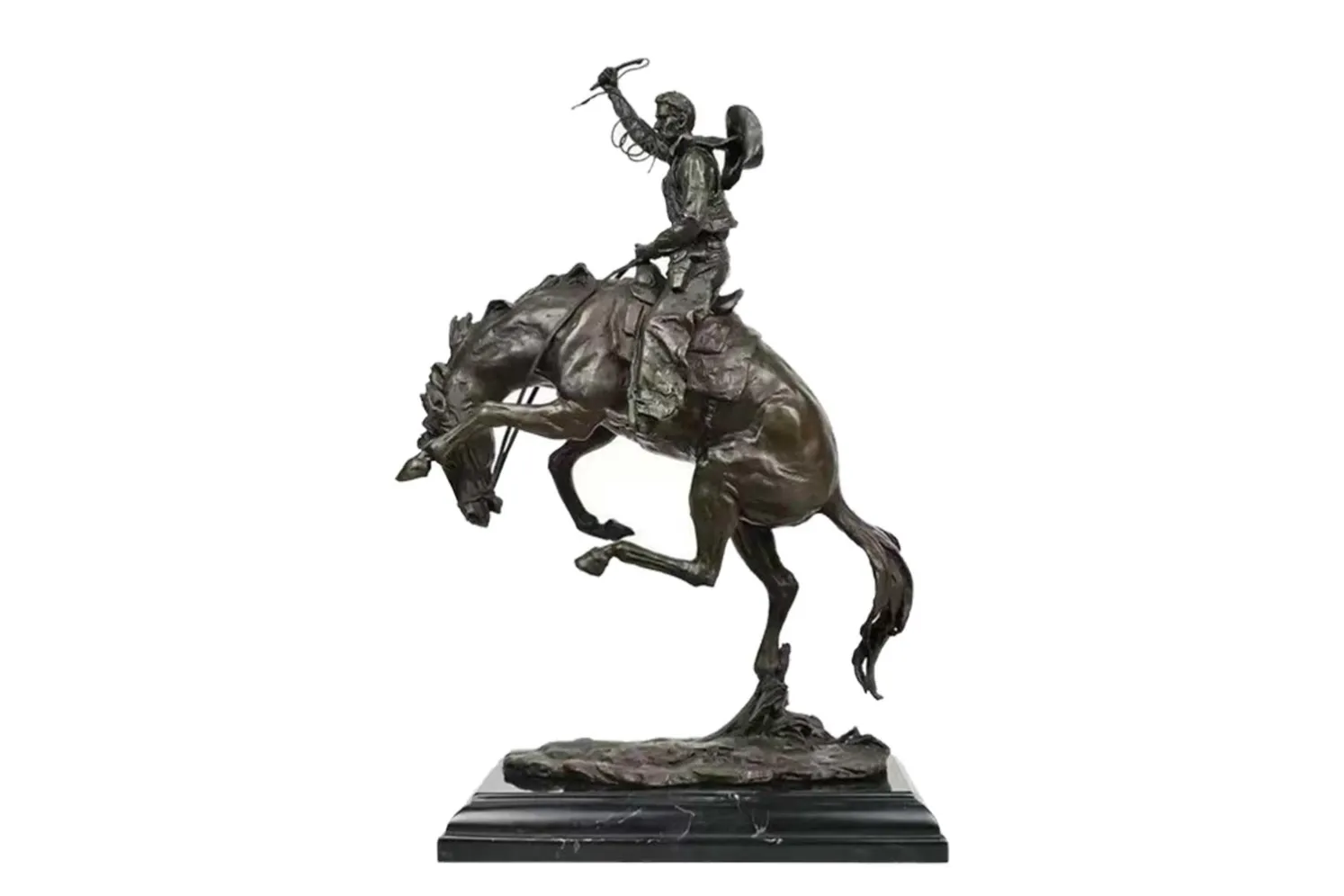
A custom bronze trophy is more than an award with a name engraved on it. For organizations ordering championship trophies, annual event awards, corporate recognition pieces, or commemorative awards, the manufacturing process affects the appearance, consistency, cost, and delivery schedule of every piece.
The challenge is knowing what to specify before production starts.
Bronze trophies can range from a relatively simple cast figure on a standard base to a completely bespoke sculpture developed specifically for an organization or event. The right production approach depends on your quantity, design requirements, budget, and delivery date.
At Patinara Art, we manufacture custom bronze sculptures and awards using traditional lost-wax casting techniques. This guide explains the main decisions B2B buyers should make before placing a custom bronze trophy order.
What Makes a Bronze Trophy Different?
Not every trophy described as "bronze" is made in the same way.
Some awards use bronze-colored finishes over other materials. Others use cast bronze components combined with standard bases. A fully cast bronze trophy is different again, particularly when the design requires detailed sculptural forms and a hand-finished patina.
For buyers, the important questions are:
- What material is used for the trophy?
- Is the design custom or from an existing catalog?
- How is the bronze cast?
- What type of surface finish is required?
- Is the base custom-made?
- How will engraving be handled?
- How will consistency be controlled across a larger production run?
These details have a direct impact on both cost and final appearance.
Three Approaches to Custom Bronze Trophies
There is no single production model that works for every award program.
1. Bronze Figure on a Standard Base
This is the most straightforward option.
A cast bronze figure or relatively simple bronze form is combined with a commercially available wood, stone, acrylic, or metal base.
This approach works well when the budget is controlled and the main requirement is a genuine bronze award rather than a completely original design.
Suitable for:
- Clubs and associations
- Smaller competitions
- Annual recognition programs
- Organizations ordering relatively simple awards
The trade-off is limited customization. The figure, dimensions, and base options may be restricted by existing components.
2. Custom Bronze Trophy with Custom Base
For most professional B2B award programs, this is often the most practical option.
The bronze component is developed around the event, organization, or award concept. The base can then be customized to accommodate the event name, logo, year, recipient information, or sponsor branding.
The result is a trophy that feels specific to the organization without requiring a completely original sculptural commission.
Typical applications include:
- Sports associations
- Corporate awards
- Regional competitions
- Annual industry awards
- Corporate milestone programs
- Event recognition
3. Fully Bespoke Bronze Award
A fully bespoke trophy starts with the concept rather than an existing product.
The shape, proportions, sculptural details, base, surface finish, and presentation are developed specifically for the client.
This approach is particularly appropriate when the trophy itself needs to become part of an event's identity.
Examples include:
- Championship trophies
- National and international competitions
- Major corporate awards
- Institutional commemorative awards
- Museum-quality presentation pieces
Because the design and tooling are developed specifically for the project, bespoke awards require more planning and production time.
How Custom Bronze Trophy Production Works
A successful project usually starts long before the bronze is poured.
Step 1: Define the Project Brief
Before developing a design or quotation, a manufacturer needs several basic specifications.
Quantity
A single championship trophy and an order of 200 annual awards may use very different production strategies.
Dimensions
Overall height, width, weight, and base dimensions should be established early.
Purpose
The design should reflect whether the award is intended for a sporting event, corporate recognition program, commemorative occasion, or another application.
Budget
A realistic budget helps determine the appropriate level of sculptural detail, material, finishing, base, and production method.
Timeline
Custom bronze production involves several stages. The required delivery date should be established before design work begins.
Branding
Logos, colors, typography, event identity, and other brand elements can be incorporated into the design or base.
Step 2: Develop the Trophy Design
Once the brief is established, the manufacturer can develop the design.
For a custom project, the design stage may include:
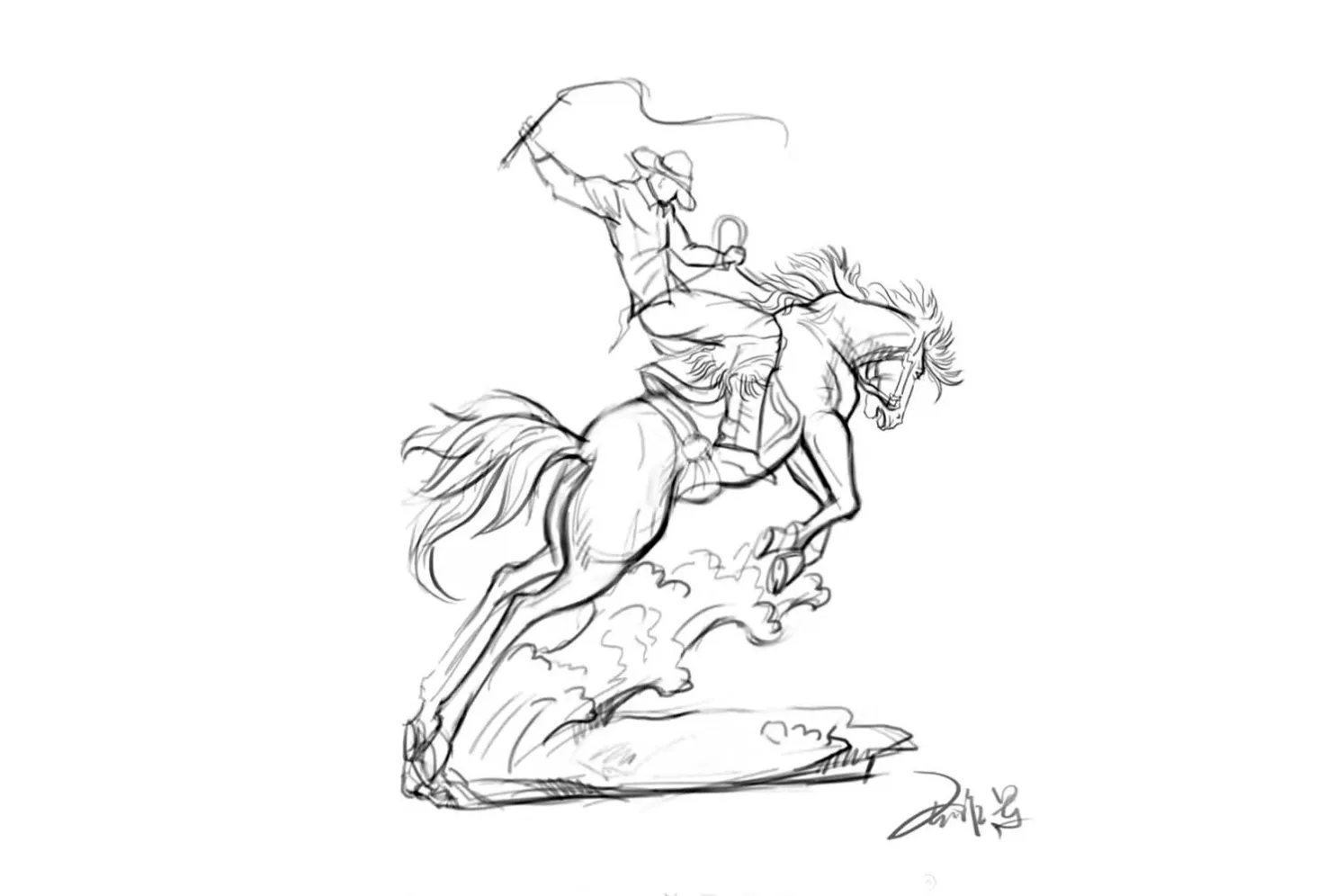
- Concept development
- 3D modeling or sculpting
- Dimensional planning
- Base design
- Patina selection
- Engraving area planning
- Preliminary production costing
One important consideration is manufacturability.
A design may look excellent in a digital rendering but become unnecessarily expensive or difficult to cast if it contains extremely thin sections, complicated undercuts, or fragile details.
An experienced bronze foundry should therefore be involved during the design stage rather than simply receiving a finished file at the end.
Step 3: Create the Pattern and Wax Model
For traditional lost-wax casting, the approved design is translated into a physical pattern and wax model.
The wax stage is particularly important because many details visible in the final sculpture originate here.
The manufacturer checks:
- Sculptural proportions
- Surface details
- Wall thickness
- Structural strength
- Assembly points
- Casting requirements
Once the wax model is approved, it can move into the casting process.
Step 4: Lost-Wax Bronze Casting
The wax model is used to create the ceramic investment mold.
The wax is then removed, leaving a cavity that reproduces the sculpture.
Molten bronze is poured into the mold. After cooling, the investment material is removed and the raw casting is cleaned and inspected.
Larger or more complex trophies may require multiple cast sections that are assembled after casting.
This is one reason why the manufacturing experience of the foundry matters. Casting a decorative object and producing a structurally sound sculptural award are not always the same process.
Step 5: Chasing, Polishing and Patina
Raw bronze casting is only the beginning of the finishing process.
After casting, artisans remove casting imperfections, refine the surface, and restore details that need additional work.
The surface can then receive the required patina.
Common finishes include:
- Dark antique bronze
- Brown bronze
- Warm golden bronze
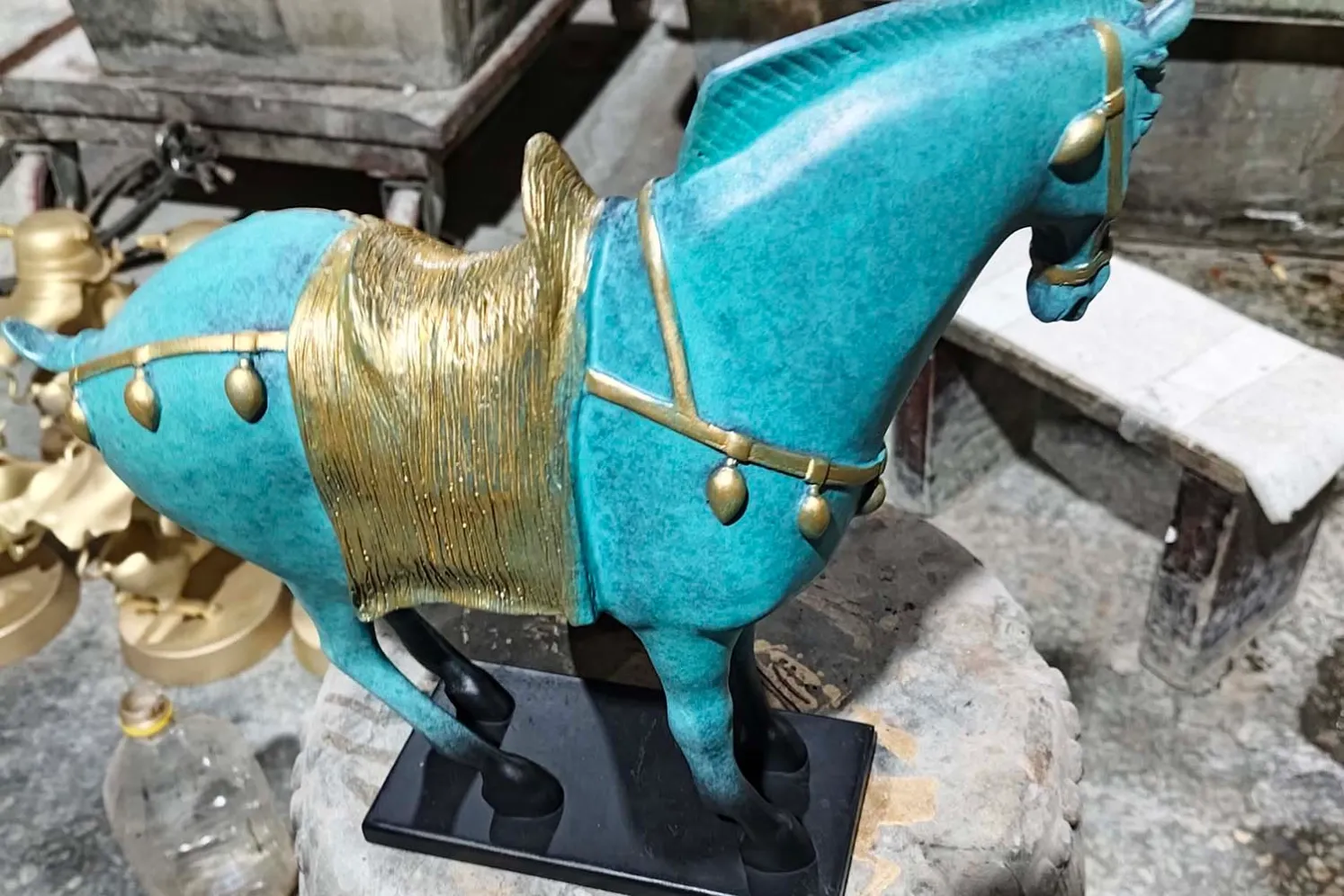
- Green or turquoise patina
- Custom multi-tone finishes
Patina is not simply a color applied at the end. The final appearance depends on the bronze surface preparation, chemical treatment, application technique, and protective coating.
For branded award programs, a physical sample is particularly useful because screen colors do not always represent the final bronze finish accurately.
Custom Trophy Bases: What Should You Choose?
The base is an important part of the finished award and should be considered during the design stage.
Wood Bases
Walnut, oak, maple, and other hardwoods provide a traditional presentation.
They are particularly suitable for:
- Corporate awards
- Sporting trophies
- Traditional championship designs
- Awards requiring extensive engraving
Marble or Granite Bases
Stone creates a heavier and more substantial presentation.
It works well for formal awards and commemorative pieces, although the additional weight can increase international shipping costs.
Metal Bases
Bronze, brass, and steel can create a more unified appearance when combined with a metal sculpture.
A metal base is often appropriate for premium or fully bespoke awards.
Acrylic Bases
Acrylic is lightweight and can be useful for larger-volume programs where shipping weight and production cost need to be controlled.
It also provides a more contemporary appearance.
Custom-Shaped Bases
For a fully bespoke trophy, the base can become part of the overall sculpture rather than simply supporting it.
Custom geometry, logos, architectural forms, and event-specific elements can all be incorporated into the design.
Engraving and Personalization
Engraving should be considered before the trophy is manufactured, not added as an afterthought.
Depending on the design and quantity, personalization may include:
- Recipient names
- Event names
- Championship titles
- Dates
- Organization logos
- Sponsor information
- Serial numbers
Laser engraving is useful for precise text and graphics, particularly for larger production runs.
Rotary engraving provides a more traditional engraved appearance and can be suitable for certain metal or stone surfaces.
Hand engraving is generally reserved for premium awards where the craftsmanship of the engraving is itself part of the presentation.
For annual events, it is also worth deciding whether the recipient information will be available before production or added later.
What Determines the Cost of a Custom Bronze Trophy?
The price of a custom bronze trophy is not determined by weight alone.
Several factors can significantly affect the final quotation.
Design Complexity
A highly detailed sculptural design generally requires more modeling, pattern-making, finishing, and inspection.
Size and Weight
Larger trophies require more bronze and may involve additional casting and assembly work.
Quantity
Production volume can affect tooling and per-unit costs. The economics of producing one bespoke trophy are very different from producing 100 or 500 pieces.
Surface Finish
A straightforward antique finish is usually less complex than a multi-tone or highly customized patina.
Base
Wood, stone, metal, acrylic, and custom-shaped bases have different material and processing costs.
Engraving
The amount and type of personalization also affect production and finishing requirements.
Packaging and Shipping
Premium trophies need adequate individual protection. International orders may require reinforced export packaging or custom crating depending on size and destination.
For this reason, a useful quotation should be based on the complete specification rather than a single "price per bronze trophy."
How Many Custom Bronze Trophies Should You Order?
Quantity should be discussed early because it can influence the manufacturing approach.
For example:
1–10 pieces
Best suited to bespoke or highly customized awards where individuality is more important than unit cost.
10–50 pieces
A practical range for many corporate, association, and event programs.
50–200+ pieces
Higher-volume production makes consistency, tooling strategy, packaging, and production scheduling increasingly important.
For recurring annual awards, the initial design should also be developed with future production in mind.
A well-designed production pattern can make repeat orders much easier while helping maintain consistency from one event year to the next.
How Long Does Custom Bronze Trophy Production Take?
Lead time depends heavily on the complexity of the project.
A relatively straightforward custom bronze award may require several weeks from design approval to delivery.
A fully bespoke trophy involving new sculptural development, tooling, sampling, casting, finishing, engraving, and international shipping can require several months.
A typical project may include:
Design and quotation → 3D development → pattern/wax → casting → finishing → sample approval → bulk production → engraving → packaging → shipping
The exact schedule should be established before production begins.
For event organizers, the safest approach is to work backward from the event date rather than asking only how quickly the manufacturer can produce the trophy.
Why Sample Approval Matters for Bulk Orders
For larger orders, approving a physical sample before full production is one of the most important quality-control steps.
The sample allows the buyer to evaluate:
- Overall dimensions
- Sculptural detail
- Bronze surface quality
- Patina color
- Base construction
- Engraving
- Packaging
- Overall presentation
Once approved, the sample becomes the production reference.
This is particularly important when dozens or hundreds of trophies need to look consistent at the same event.
Common Mistakes B2B Trophy Buyers Make
Starting with the Design Instead of the Budget
A design can become significantly more expensive once casting, finishing, and base requirements are calculated.
Establishing a realistic budget early helps avoid major redesigns later.
Leaving Too Little Time for Sampling
A sample is not simply a formality. It gives both the buyer and manufacturer an opportunity to identify problems before bulk production.
Treating the Base as an Afterthought
The base affects the overall proportion, stability, presentation, and perceived value of the trophy.
Using Too Much Text
Recipient information, event details, sponsor logos, and dates can quickly make a trophy look crowded.
The engraving area should be planned as part of the design.
Not Planning for Future Orders
If the award will be produced every year, the first production should consider future repeat orders from the beginning.
Choosing a Bronze Trophy Manufacturer
When comparing manufacturers, price should not be the only consideration.
Ask about:
- Bronze casting method
- Experience with custom sculpture
- Design and 3D modeling capabilities
- Physical sample approval
- Patina and finishing options
- Custom base production
- Engraving
- Quality control
- Packaging
- Repeat-order capability
- International shipping experience
For complex projects, it is particularly useful to work directly with a manufacturer or foundry rather than a supplier that simply resells catalog products.
A manufacturer involved in the actual casting process can identify production issues earlier and provide more control over the final result.
Custom Bronze Trophies for B2B Award Programs
Custom bronze trophies can be produced for a wide range of professional applications, including:
- Sports championships
- Equestrian competitions
- Industry awards
- Corporate recognition
- Association awards
- Annual events
- Commemorative programs
- Institutional awards
- Premium corporate gifts
The production approach can be adjusted according to quantity, design complexity, budget, and delivery requirements.
For organizations running recurring award programs, the goal is not simply to produce one attractive trophy. It is to establish a repeatable production system that maintains the same design language and quality over time.
Work With a Bronze Sculpture Manufacturer
At Patinara Art, we combine traditional lost-wax bronze casting with custom sculpture manufacturing for B2B clients.
Our workshop supports projects from concept development and wax modeling through bronze casting, polishing, patina finishing, assembly, and final inspection.
We work with buyers looking for:
- Custom bronze trophies
- Bespoke bronze awards
- Custom bronze sculptures
- Wholesale bronze production
- Long-term repeat manufacturing
If you already have a concept, drawing, reference image, or 3D file, we can evaluate the manufacturing requirements and recommend a suitable production approach.
Request a Custom Bronze Trophy Quote
To start a project, send us:
Design or reference: Sketch, image, 3D file, or existing product reference
Quantity: Estimated order quantity
Size: Approximate dimensions
Finish: Preferred bronze or patina appearance
Base: Wood, stone, metal, acrylic, or custom
Engraving: Text, logo, or personalization requirements
Delivery date: Target arrival date
Destination: Shipping country or region
The more complete the initial specification, the more accurately a manufacturer can evaluate feasibility, production time, and cost.
Ready to develop your custom bronze trophy? Contact Patinara Art to discuss your project and request a manufacturing quotation.