Sep 28, 2026
Custom Bronze Horse Trophies for Show Events: A Design Guide
Planning custom horse trophies for a show event? Design options by discipline, base and patina choices, quantity tiers — and how sample approval with a foundry actually works.
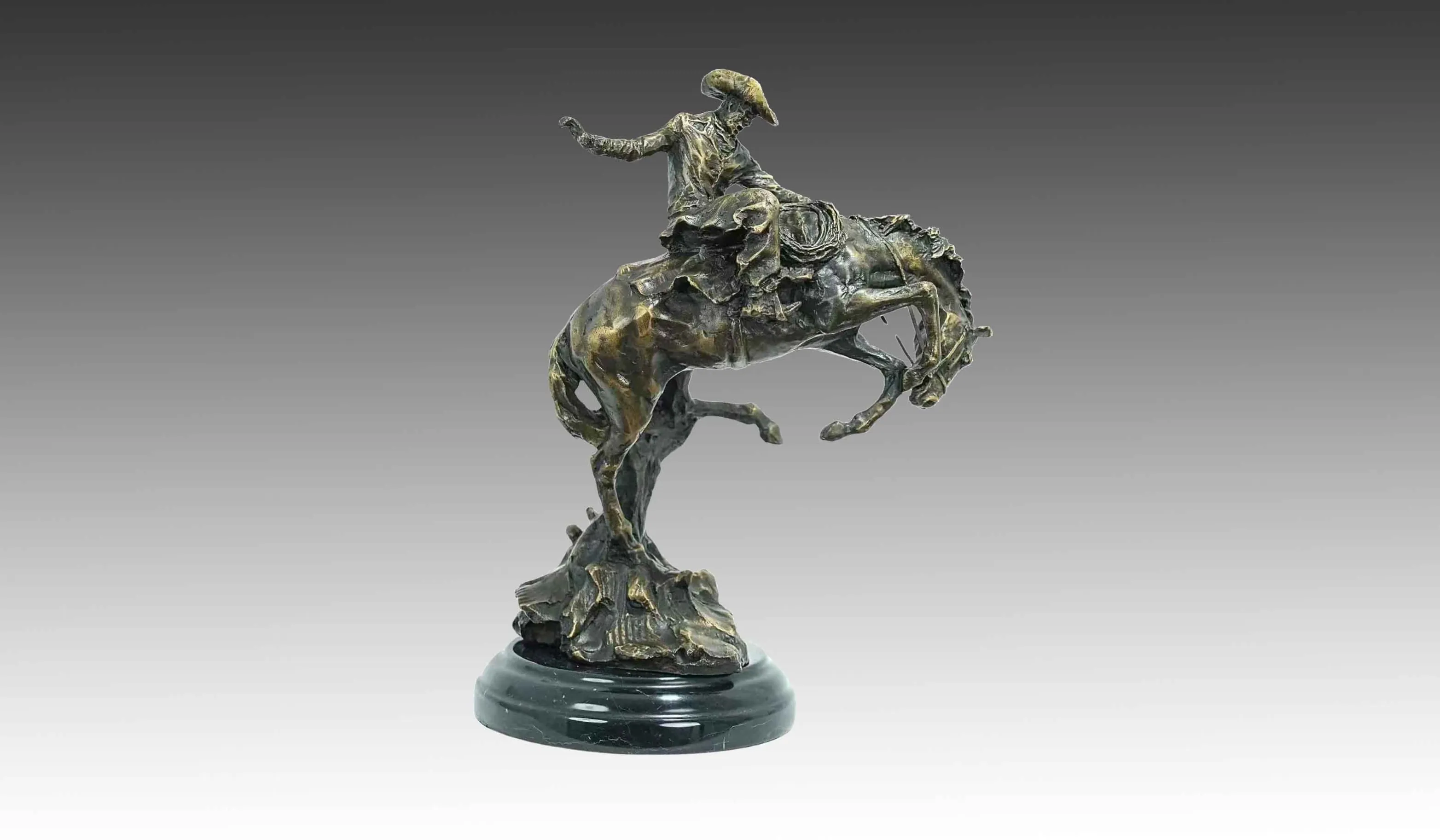
A good horse trophy doesn't just get stored in a closet. It gets displayed. It gets photographed. It gets passed down. A great horse trophy is an heirloom.
If you're commissioning horse trophies for a show event — a regional circuit, a national championship, a breed show, an annual event — the question isn't just "how do we get bronze trophies?" It's "how do we get trophies that the winners are proud to put on a shelf?"
This guide covers what you need to know to answer that question well.
Horse Trophy Design Options
The horse trophy category covers a wide range of approaches. Here's how to think about them:
By Form
- Full horse figure: A complete horse in a static pose or in motion. The most traditional trophy form. Works for all equestrian disciplines but requires design specificity to avoid looking generic.
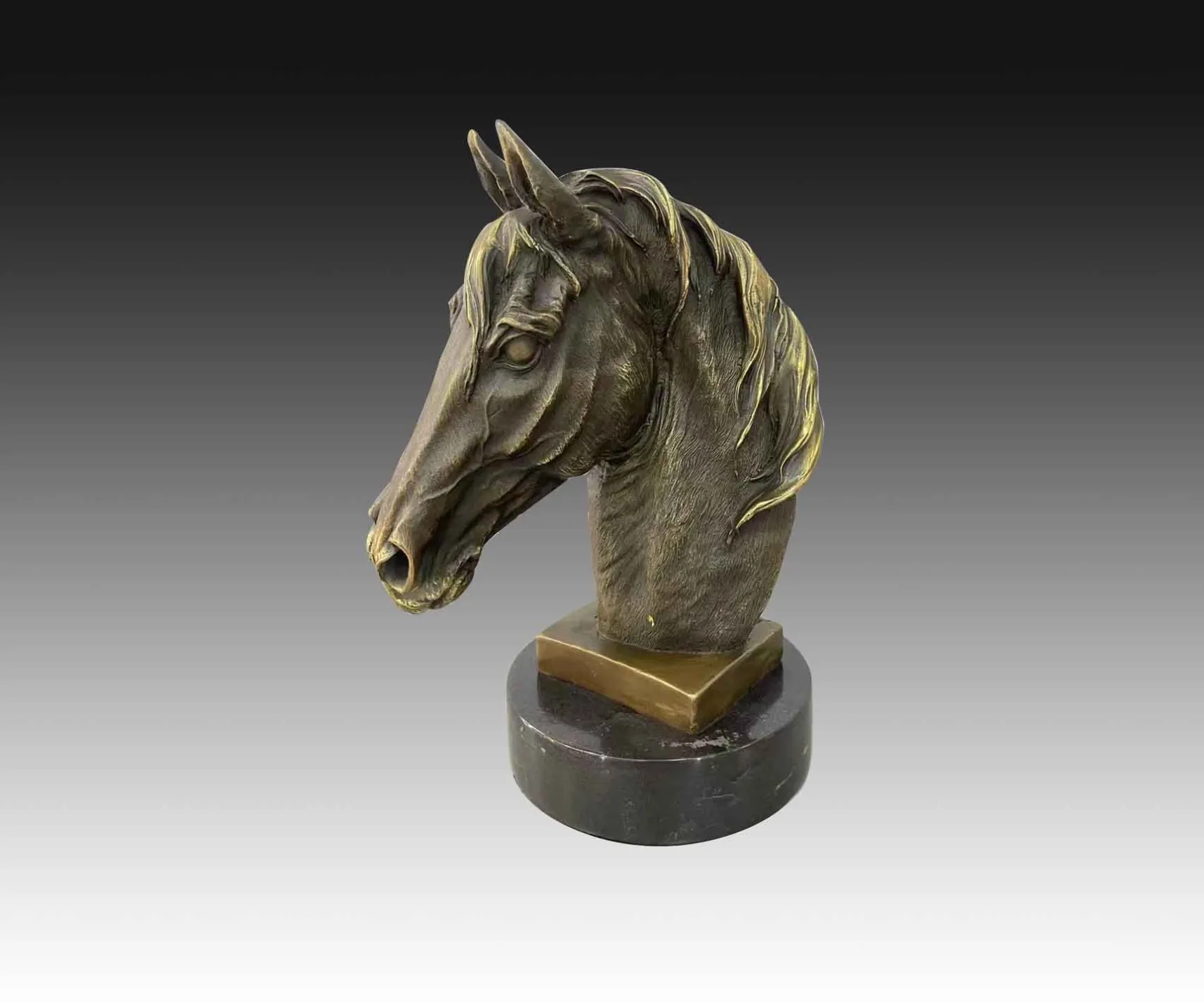
- Horse head bust: A sculptural head and neck, typically in a side or three-quarter view. More intimate scale, works well for smaller trophies or for awards where the figure represents a discipline rather than a specific pose.
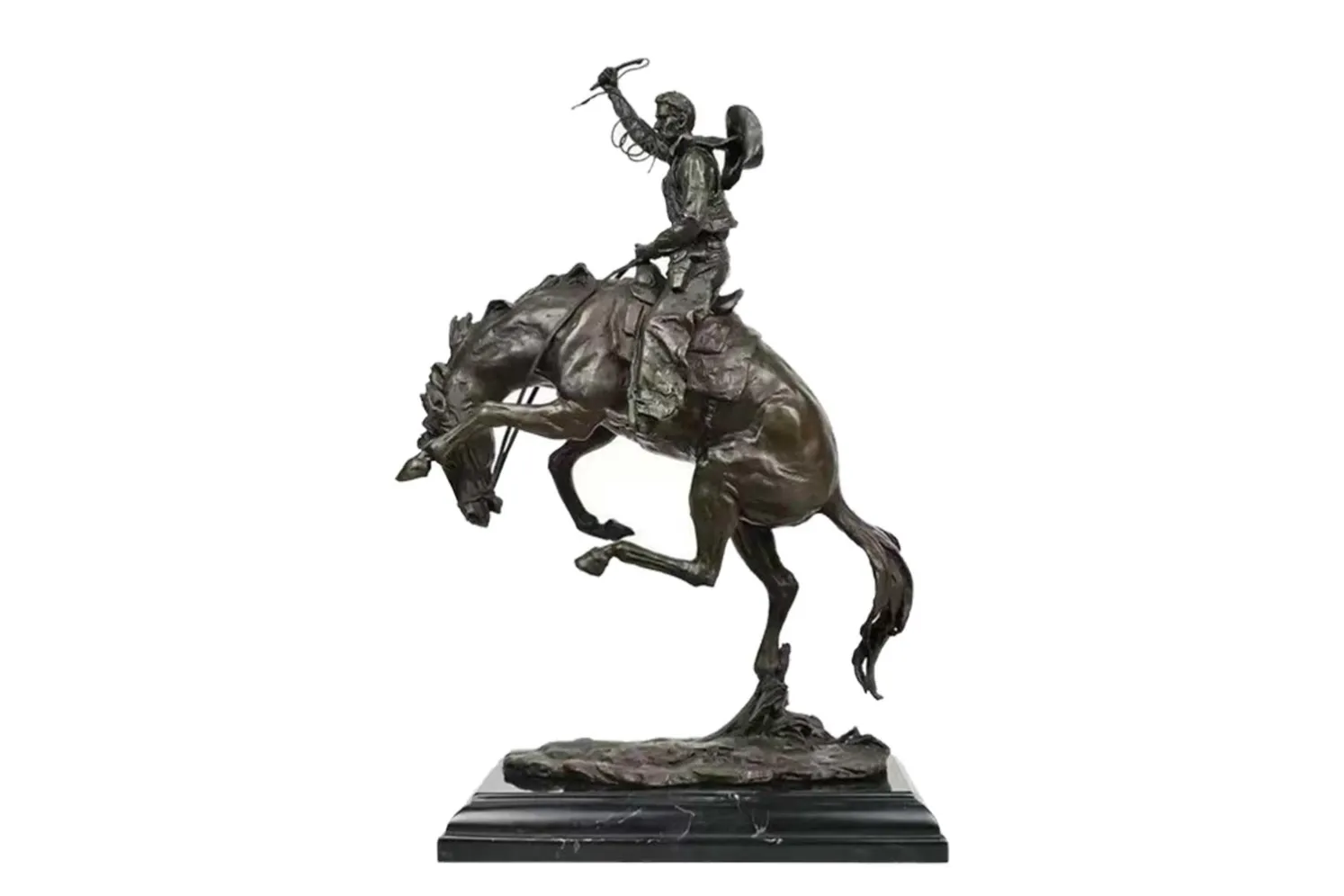
- Rider and horse: The combination figure — horse and rider together. Common in eventing, show jumping, and dressage. More complex to design and produce, and more expensive than a horse-only figure, but carries more narrative weight.
- Equestrian equipment motifs: Bridles, horseshoes, bits, stirrups — sculptural elements derived from tack rather than the horse itself. Works well for awards where the figure needs to be more symbolic than literal.
By Discipline
Reining trophies should show the reining horse in its characteristic frame — hindquarters engaged, neck dropped and arched, head at or slightly in front of the vertical. The collected, controlled posture is the visual signature of the discipline. A reining trophy that shows a horse in a stretched canter or an extended trot doesn't look like reining. (If you're evaluating quality before you order, we cover that separately in our reining trophy quality guide.)
Show jumping trophies typically depict the horse and rider at or over a fence — dynamic, aerial, with the sense of effort and precision that defines the sport. The fence itself can be incorporated as a base element.
Dressage trophies tend toward classical, refined forms — the horse in an elevated, collected frame, emphasizing the precision and elegance of the discipline. Less dynamic than jumping, more sculptural.
Western performance trophies (reining, western riding, trail) carry the visual vocabulary of Western tack and form — the aesthetic is different from English performance disciplines.
Halter/show horse trophies focus on the horse as a specimen — conformation, presence, breeding quality. These tend toward more literal, anatomical accuracy than performance trophies.
By Pose
- Stationary pose — The horse in a balanced, standing position. Easiest to cast well, most forgiving of production variation, best for large quantities where consistency matters.
- Dynamic pose — The horse in motion (canter, trot, jump). More difficult to cast, more visually striking. Better for single championship trophies than for bulk awards.
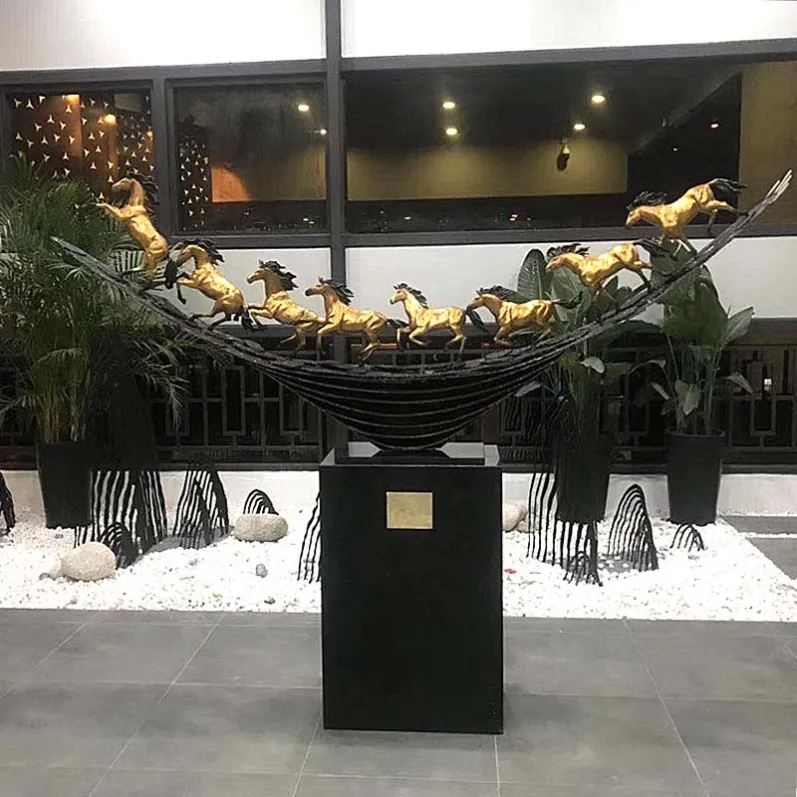
- Abstract/formative — Stylized or simplified horse forms that prioritize visual impact over anatomical accuracy. Can be very effective for modern events or brand-forward organizations. Requires skilled design to avoid looking cheap.
Customization Dimensions
When commissioning horse trophies, each of these dimensions can be customized:
Scale
Trophies range from small (10–15cm) to large championship pieces (60cm+). The scale affects:
- Detail resolution (larger pieces can carry more anatomical detail)
- Weight and feel
- Base requirements
- Price (non-linearly — doubling scale doesn't double price)
Most event trophy programs use tiered scales — a larger championship trophy for first place, smaller awards for other placements.
Patina Color
The bronze surface color can be developed to match your event's visual identity:
- Classic antique brown — The most versatile, works for virtually all events
- Dark bronze/black patina — More dramatic, reads well in photography
- Warm amber/gold tones — Higher perceived warmth, works well with dark wood bases
- Verdigris/green patina — Traditional and distinctive, associated with aged bronze
Custom color matching to brand guidelines is available — send a physical sample or Pantone reference and we'll develop a match. (Curious how patina is actually made rather than painted on? Our hot-patina guide covers the chemistry.)
Base
Base selection significantly affects the trophy's visual weight and formality:
- Marble-finish composite stone — The standard for most programs. Polished-stone look without the weight, takes engraving well.
- Natural stone — For major championships that want the real thing. Quoted per project.
- Wood (walnut, mahogany, black lacquer) — Classic and warm; black lacquer pairs well with dark patina bronze.
- Bronze or brass — Material unity, high-end appearance.
Base size and height should be proportional to the bronze figure — too small a base makes the trophy look unstable; too large a base overwhelms the figure.
Engraving
Engraving is typically on the base face, but can also be:
- On a plaque affixed to the front of the base
- Laser-etched on the bronze surface itself
- On an attached medallion or nameplate
Plan engraving content early — each line of text competes for visual space. One or two lines of large, legible text is almost always better than three or four lines of small text.
Production Quantities and Pricing
Horse trophy programs typically operate in these quantity tiers:
- Championship trophy (1–3 pieces): Single or small-run production of a major trophy piece. Design investment is high; per-unit cost is high. Appropriate for a grand championship trophy that will be retained by the winner or displayed by the organization.
- Tiered awards (10–50 pieces): Production of a family of trophy sizes — typically three sizes for first, second, and third place. More cost-effective per unit than single-piece production. This is the most common tier for regional and national events.
- Bulk event awards (50–200+ pieces): High-volume production with per-unit economics that allow for lower individual prices while maintaining quality. Appropriate for circuit awards, annual event series, or breed show programs with many divisions.
We can structure pricing across all quantity tiers. Per-unit cost drops as quantity increases — but the design and mold investment is the same regardless of quantity. For organizations that reorder annually, building the mold investment into the first order and quoting production costs only for reorders makes the economics significantly more favorable over time. (How molds make or break detail quality is a story of its own — we wrote about it here.)
For a general walkthrough of commissioning bronze trophies and awards — materials, approval flow, reorder logistics — see our complete buyer's guide. This guide stays on the horse-specific decisions.
How Long to Allow
Honest answer: longer than most organizers plan for.
A custom trophy program runs through design, mold-making, sample casting, approval, and production. Bigger programs don't just add units — they add molds, and molds are where the schedule really grows.
Two things break timelines more than anything else:
- Starting late. The most common mistake in trophy commissioning. If your event is in October, you need to be in conversations with your foundry by February or March at the latest.
- Chinese New Year. Production in our workshop pauses for the holiday (late January to mid-February). A schedule that looks comfortable in November can fall apart in January.
Exact schedules are set out in your quotation, once we can see the design scope and quantities. For the full stage-by-stage breakdown, see How Long Does a Custom Bronze Sculpture Take?
Working with Your Foundry
Come with a clear brief. The best trophy commissions start with a conversation about what the event represents and what feeling the trophy should carry — not just a description of what it should look like. The brief informs the design direction.
Engage your design team early. If your organization works with a brand agency, involve them early. The trophy's visual identity should be consistent with the event's broader brand language.
Approve the physical sample — not photographs. This one matters. During development we send photos and video, and they're useful for steering color and detail. But approval happens on the sample you can hold in your hand. We build two finished samples: one ships to you for sign-off, one stays with us as the production reference. Your written approval on that sample is what releases production. If a photo looks perfect but the piece in your hand doesn't, the piece in your hand wins.
Plan for reorders. If your event is annual, design the trophy with repeat production in mind from the start. This affects mold construction and color consistency across years.
What to Include in Your Trophy Brief
When you reach out for a horse trophy commission, it helps to include:
- Event name and type (breed show, open show, circuit, championship)
- Disciplines or classes the trophy covers
- Quantity needed per event/division
- Preferred scale (height of the bronze figure)
- Base type preference
- Engraving requirements
- Timeline and delivery date
- Budget range
- Any existing brand guidelines or design language to reference
The two that speed everything up most: figure height and total quantity. With those, we can give you a real quote. Without them, everything is a guess.
Ready to Commission?
Tell us about your show and what you're looking for. We can work from a concept description, reference images, or an existing trophy you're trying to improve on. Send your figure height and quantity along with the first message and you'll have initial feasibility feedback within one business day — itemized pricing follows once size and quantity are on the table.