Sep 1, 2026Buying Guides
Custom Bronze Sculpture Pricing: What Really Determines the Cost?
What determines the cost of a custom bronze sculpture? Learn how design, size, casting, patina, molds, quantity, bases, and shipping affect the final price.
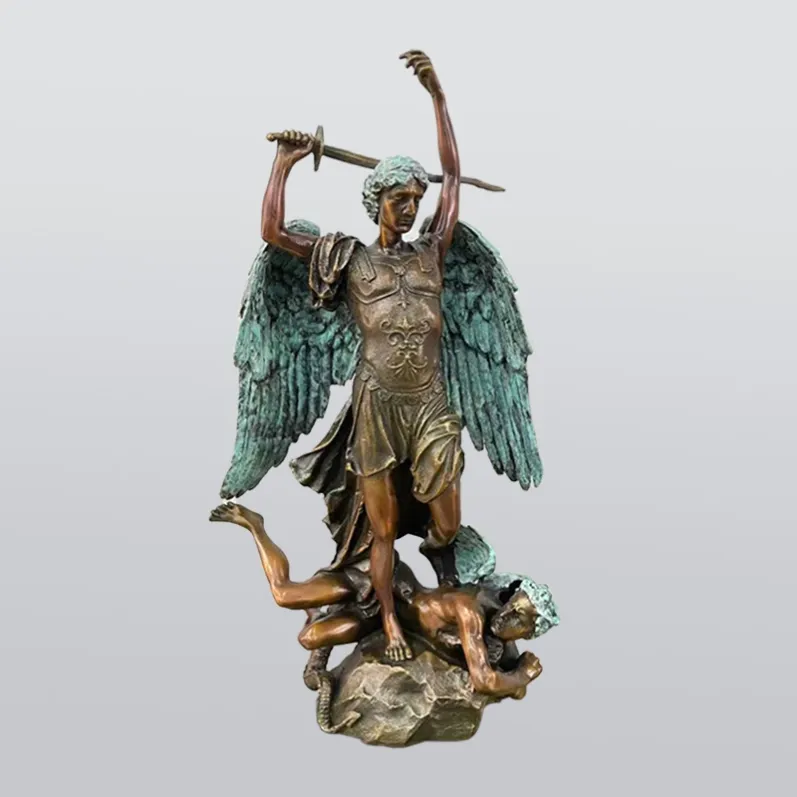
Custom bronze sculpture pricing can vary widely. Two sculptures that look similar in a photograph may require very different amounts of modeling, mold-making, casting, welding, finishing, and packaging.
This is one reason comparing quotes from different suppliers can be difficult. A quotation is not simply a price for the amount of bronze used. It reflects the amount of work required to turn a design into a finished sculpture.
For buyers working with a bronze foundry or bronze sculpture foundry, understanding these cost factors makes it much easier to compare quotations and decide where a project can be adjusted without compromising the final result.
This guide explains the main factors that influence custom bronze sculpture pricing and what to look for when requesting a quotation.
What Determines the Price of a Custom Bronze Sculpture?
There is no single formula that applies to every project. In practice, the cost is usually influenced by several factors:
- Design and modeling complexity
- Overall size and structural requirements
- Mold-making and casting method
- Surface finishing and patina
- Production quantity
- Base and mounting requirements
- Packaging, shipping, and installation
The relative importance of each factor changes from project to project. A small but highly detailed figurative sculpture can require more finishing work than a larger, simpler form. Likewise, a large outdoor sculpture may involve structural engineering and installation considerations that do not apply to a small indoor piece.
1. Design Complexity
A simple geometric sculpture may have relatively few surfaces and straightforward casting requirements. A realistic figure, animal, or complex architectural form can require considerably more work.
Common factors include:
Fine surface detail
Hair, feathers, fabric, facial features, musculature, textures, lettering, and other small details all have to be accurately reproduced in the model and mold.
Undercuts and complex geometry
Deep undercuts, narrow openings, enclosed areas, thin sections, and complicated shapes can make mold-making and casting more difficult.
Multiple sections
Large or complicated sculptures are often divided into several cast sections. These sections must later be fitted, welded, chased, and finished so that the joints are difficult to see in the final work.
Original modeling
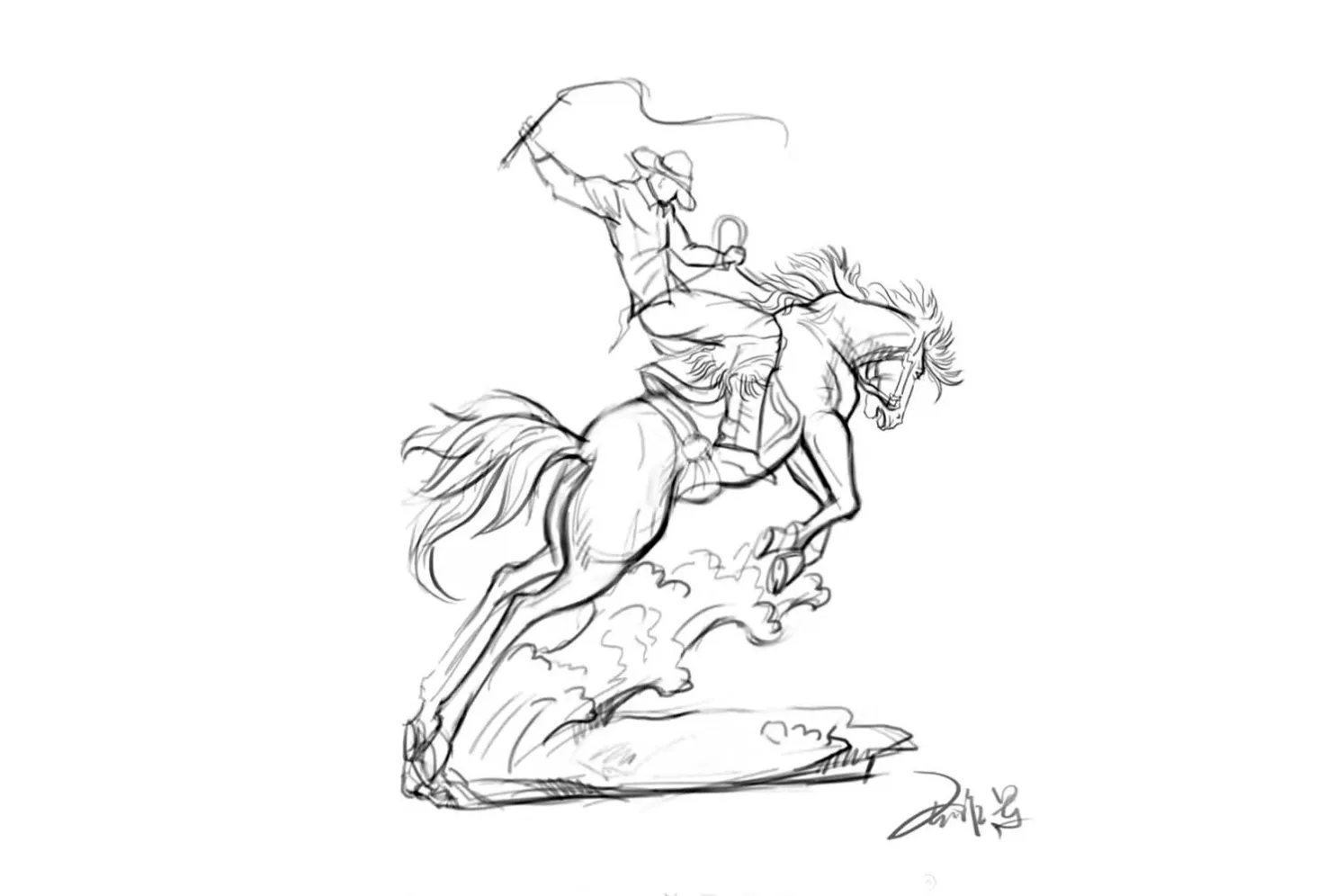
If the client only has a sketch, photograph, or concept rather than a finished sculpture model, additional sculpting or 3D modeling may be required before casting can begin.
This is an important distinction when comparing quotations. One supplier may be quoting only for casting an approved model, while another quotation may include modeling and development work.
2. Size and Structural Requirements
Size affects more than the amount of bronze required.
As a sculpture becomes larger, the production process may involve hollow construction, multiple cast sections, internal supports, lifting points, transportation planning, and installation requirements.
For larger sculptures, the foundry may need to consider:
- Sectioning of the sculpture for casting
- Bronze wall thickness
- Internal armature or reinforcement
- Welding and chasing between sections
- Lifting and handling
- Transportation limitations
- Anchoring and installation
The exact construction method depends on the sculpture rather than a fixed height threshold.
A two-meter abstract sculpture, for example, may be relatively straightforward if its geometry is simple. A smaller but highly detailed multi-figure sculpture may require significantly more mold-making and finishing work.
For this reason, size alone is not a reliable way to estimate the cost of a bronze sculpture.
3. Mold-Making and Lost-Wax Bronze Casting
For projects produced through lost wax bronze casting, the mold is an important part of the production process.
The basic process typically involves creating a wax pattern from the approved model, preparing the ceramic investment mold, removing the wax during burnout, pouring molten bronze into the resulting cavity, and then breaking away the mold after casting.
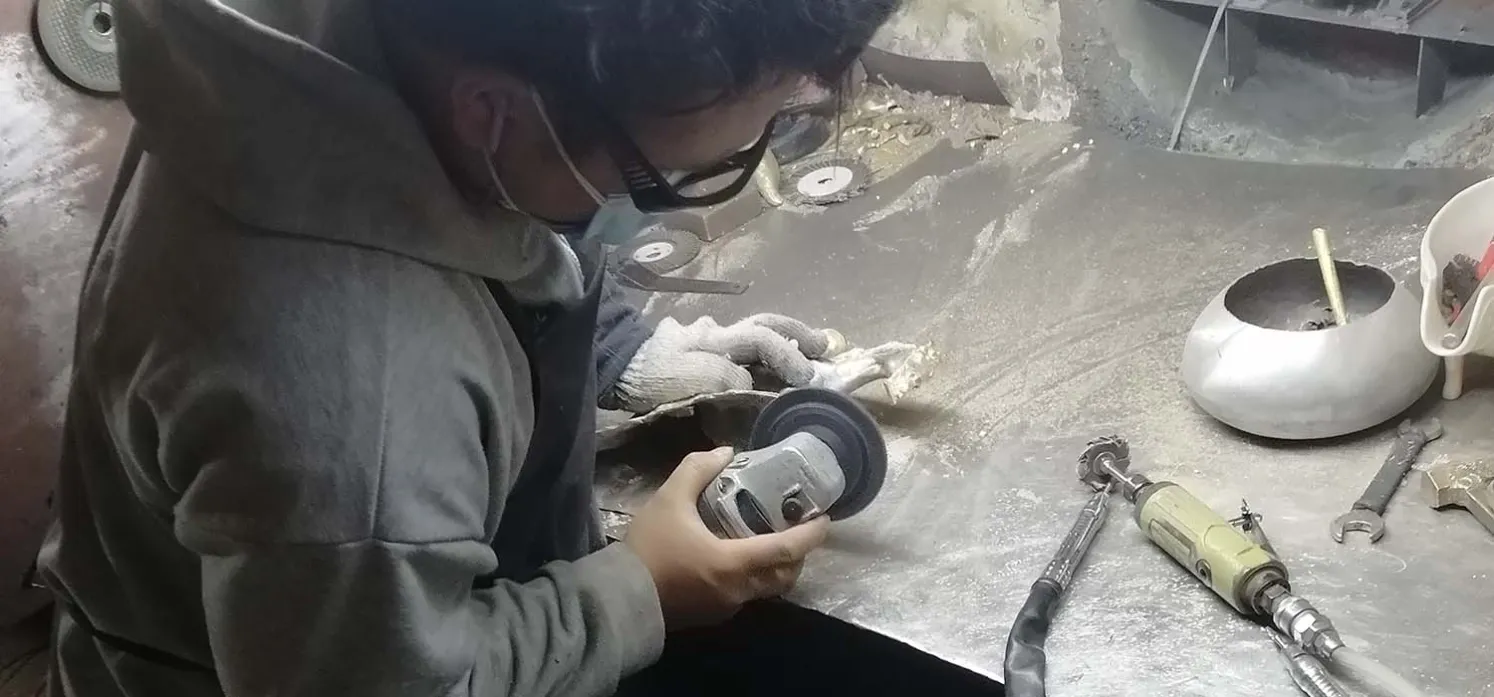
After casting, the raw bronze still requires substantial work. Gates and casting remnants are removed, surfaces are cleaned, sections may be welded together, and the sculpture is chased and finished before patination.
This is why the cost of bronze casting cannot be calculated simply from the weight of the finished sculpture.
A bronze casting foundry is charging for the complete production process: preparation, molds, wax work, casting, metal finishing, labor, equipment, quality control, and related handling.
One-off production vs. repeat production
Mold costs become particularly important when the same sculpture will be produced more than once.
For a one-off sculpture, the mold-making work is associated with a single finished piece.
For a production run, the same mold and approved model can potentially be used for multiple castings, depending on the mold construction and production requirements. This can reduce the mold-related cost per unit.
If you are developing a product line, trophy series, collection, or repeat-order program, tell the foundry before production begins. The casting and mold strategy can then be planned around the expected quantity.
4. Surface Finish and Patina
The casting is not the finished sculpture.
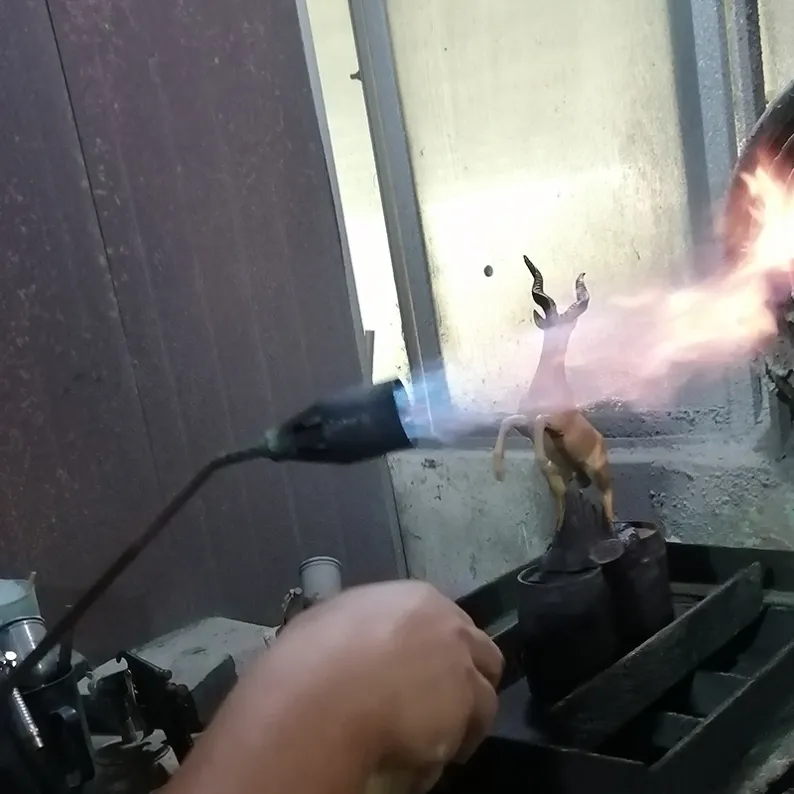
After the bronze has been cast, the surface normally goes through cleaning, chasing, grinding, polishing, repair, and other finishing work before the final patina is applied.
The finishing specification can therefore have a noticeable effect on the quotation.
Standard patina
Traditional brown, dark, black, or green bronze finishes may follow established finishing procedures.
Custom patina
A more specific color or visual effect may require additional testing and application work.
For example, a sculpture may need:
- Multiple patina colors
- Highlighted or darker recessed areas
- Different finishes on different sections
- A specific reference color
- A combination of polished and patinated surfaces
- Protective coating for outdoor use
Polished bronze
Highly polished surfaces generally require more manual preparation than a relatively textured or traditional antique finish.
The important point is that “bronze finish” is not a single specification. When requesting quotations, provide reference images whenever possible.
A foundry can price a project more accurately when it knows what the final surface is expected to look like.
5. Production Quantity
Quantity can change the economics of a custom bronze project.
A one-off sculpture requires the development and setup work for a single piece. When several identical sculptures are produced, some of that work can be distributed across the production quantity.
Potential efficiencies include:
- Mold costs distributed across multiple units
- Repeated casting preparation
- Repeated finishing procedures
- More efficient production scheduling
- Less design development after the first approved sample
However, the discount is not unlimited. Every bronze sculpture still requires casting, finishing, inspection, packing, and other production work.
For repeat production, it is useful to request pricing for different quantity levels rather than asking only for the price of one piece.
For example:
1 piece → 5 pieces → 10 pieces → 50 pieces
The actual breakpoints depend on the design and production method.
6. Base, Mounting, and Installation
The sculpture itself is only part of a complete installation.
A quotation may or may not include a base, mounting system, anchoring hardware, or installation.
Bases can be made from materials such as:
- Granite
- Marble
- Wood
- Metal
- Engineered stone
The cost depends on the material, dimensions, weight, fabrication method, engraving or inlay requirements, and how the sculpture is attached.
For outdoor or public projects, installation requirements can become more significant. Large sculptures may require lifting equipment, anchoring systems, structural considerations, and coordination with the installation site.
If you are comparing quotations, make sure you know whether the price refers to:
bronze sculpture only
or
finished sculpture + base + packing + delivery + installation
Those are very different quotations.
7. Packaging and International Shipping
Packaging is easy to overlook when comparing international bronze sculpture quotations.
A sculpture may need export-grade wooden crating, internal protection, moisture control, reinforced packing, or special handling depending on its size and surface finish.
Large bronze sculptures can also become expensive to ship because of their:
- Crate dimensions
- Total weight
- Shipping destination
- Freight method
- Handling requirements
- Customs and import requirements
For international projects, ask whether the quotation includes packaging only, domestic transportation, international freight, or a complete delivered price.
This prevents an artificially low factory quotation from becoming much more expensive after freight and handling are added.
What Usually Makes a Bronze Sculpture More Expensive?
The following combinations generally increase production requirements:
Project characteristic | Why it can increase cost |
|---|---|
Highly detailed surface | More modeling and hand finishing |
Complex undercuts | More complicated mold construction |
Multiple cast sections | More assembly and welding |
Large scale | Greater structural and handling requirements |
Complex patina | More finishing and color-control work |
Mirror polishing | More surface preparation |
One-off production | Mold and setup costs apply to one piece |
Custom base | Additional material and fabrication |
Difficult installation | More handling and site requirements |
International shipping | Crating, freight, and handling |
This does not mean every large or complex sculpture will automatically cost more than every smaller piece. The final price depends on the combination of requirements.
How to Compare Bronze Foundry Quotes
When you receive quotations from different suppliers, do not compare only the final number.
Ask what is included.
A useful quotation should make the following points clear:
1. Is design or modeling included?
If you provide only a sketch or reference image, find out whether sculpting or 3D modeling is included.
2. Is mold-making included?
Some suppliers include mold costs in the unit price. Others list them separately.
3. Is the sample included?
For custom production, confirm whether a sample or prototype is required and how approval works before bulk production.
4. What happens after sample approval?
Ask what happens if changes are requested after the approved model has already entered production.
5. What finish is included?
A standard antique patina and a highly customized multi-color finish should not be assumed to have the same cost.
6. Is the base included?
If the sculpture requires a marble, granite, wood, or metal base, confirm whether it is part of the quotation.
7. What packaging is included?
For international orders, confirm whether export-grade crating is included.
8. What does the shipping price cover?
Ask whether the price includes local transportation, international freight, insurance, customs clearance, or delivery to the final address.
These questions make it much easier to compare quotations on an equal basis.
Why the Cheapest Bronze Casting Quote Is Not Always the Lowest Cost
A very low initial quotation can look attractive, but the important question is what is actually included.
For example, one quotation may include:
- Model development
- Mold-making
- Casting
- Welding
- Chasing
- Patina
- Protective coating
- Crating
Another may quote only the casting itself.
The second number may appear cheaper, but the final project cost could be similar—or higher—after the missing items are added.
For B2B buyers, galleries, designers, developers, and project contractors, a clear scope of work is usually more useful than a low headline price.
How to Get a More Accurate Bronze Sculpture Estimate
A foundry does not need a perfect technical drawing to start a quotation.
The following information is usually enough for an initial assessment:
1. Reference image or sketch
Show what the sculpture should look like.
2. Approximate dimensions
Provide height, width, and depth where possible.
3. Quantity
State whether it is a one-off sculpture or a repeat-production project.
4. Intended location
Indoor, outdoor, garden, public space, hotel, commercial property, or another environment.
5. Surface finish
Provide a reference image or describe the desired patina.
6. Base requirements
Tell the foundry whether a base is required and what material you prefer.
7. Delivery destination
The destination helps determine packaging and shipping requirements.
The more complete the brief, the less uncertainty there is in the quotation.
Can You Reduce the Cost Without Changing the Concept?
In many cases, yes.
If a quotation is above budget, the solution does not always have to be making the sculpture dramatically smaller.
A foundry can review the production requirements and identify areas where the project can be simplified.
Possible adjustments include:
- Simplifying fine surface details
- Reducing unnecessary cast sections
- Adjusting the scale
- Selecting a simpler patina
- Using a standard base
- Producing several pieces in one production run
- Finalizing the design before mold production
The goal is not simply to remove work. It is to identify which parts of the specification have the greatest impact on cost while preserving the visual character of the sculpture.
This type of discussion is particularly useful when working directly with a bronze sculpture foundry, because the production team can evaluate the design from a casting perspective rather than looking only at the finished appearance.
A Practical Way to Request a Bronze Sculpture Quote
For a custom project, a useful inquiry can be as simple as:
Project: Custom bronze horse sculpture Size: Approximately 180 cm high Quantity: 5 pieces Location: Outdoor Finish: Dark brown antique patina Base: Granite, approximately 60 cm high Reference: Attached images Delivery: United States
This gives a bronze foundry enough information to understand the basic production requirements and prepare a more useful preliminary estimate.
If the design is still being developed, say so. A quotation based on a finished model is different from one that includes sculpture development.
Final Thoughts on Custom Bronze Sculpture Pricing
There is no universal price for a custom bronze sculpture.
The final cost comes from the combination of design development, mold-making, lost wax bronze casting, metal finishing, patina, quantity, structural requirements, packaging, and delivery.
For buyers, the best approach is not to search for a single “bronze sculpture price.” It is to understand what the quotation actually covers.
A professional bronze casting foundry should be able to explain the major cost components and identify which parts of the specification are driving the price.
If you are planning a custom bronze sculpture, send the concept or reference image together with the approximate dimensions, quantity, finish, and delivery destination. These details provide a much better starting point for a realistic project estimate than a generic price list.